Child Development Perspectives · 2026
Motivational resources matter
Wu, J., & Pomerantz, E. M. (2026). Parents’ involvement in children's math learning: Motivational resources matter. Child Development Perspectives, aadag004.
I study the moment-to-moment, reciprocal processes through which parents support children’s cognitive thinking and motivation—and children’s engagement shapes parents’ responses.
My goal is to identify forms of parenting practices that strengthen children’s STEM learning while preserving their autonomy, confidence, motivation, and emotional well-being.
Program overview
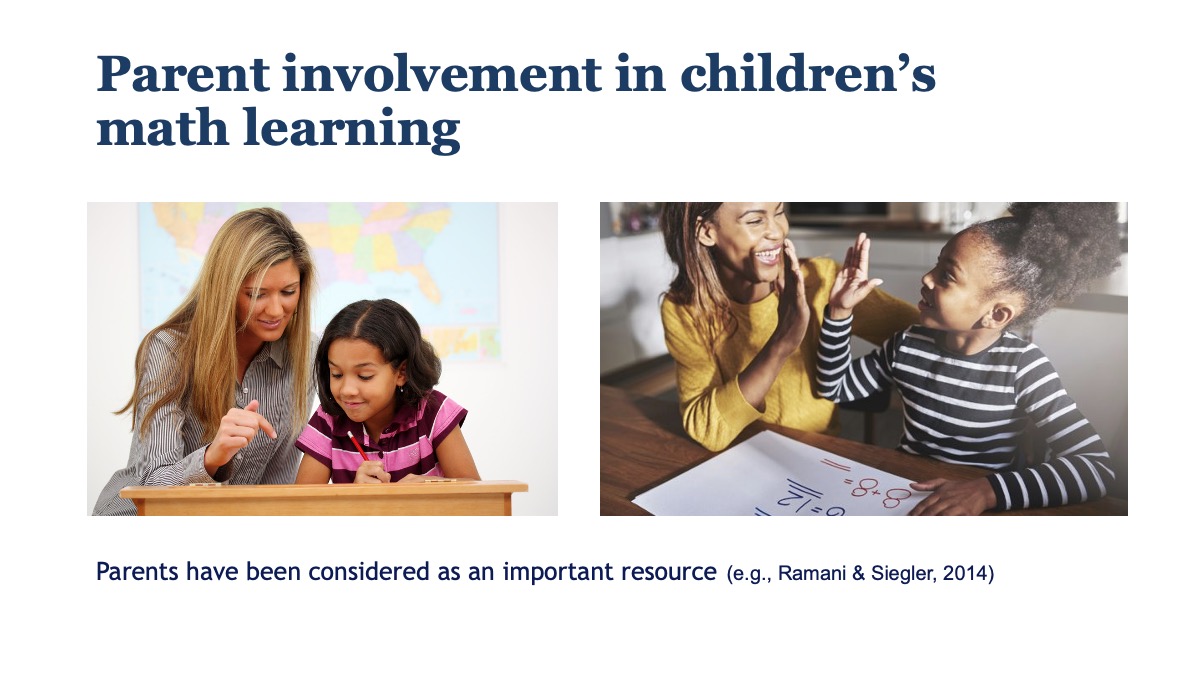
Parents support learning through the mathematical ideas and strategies they introduce, as well as through the autonomy, control, and emotional tone they bring to an interaction.
Children are active participants. Their questions, strategies, affect, and engagement can change what parents do next. This program studies those reciprocal processes as they unfold within shared STEM tasks.
Conceptual contributions
Child Development Perspectives · 2026
Wu, J., & Pomerantz, E. M. (2026). Parents’ involvement in children's math learning: Motivational resources matter. Child Development Perspectives, aadag004.
Advances in Child Development and Behavior · 2025
Pomerantz, E. M., Wu, J., & MacDonald, C. (2025). The role of parenting in children's math learning: A dual-pathway model. Advances in Child Development and Behavior, 69, 193–221.
Mathematical and spatial talk can focus attention, represent relationships, and provide strategies for solving a problem.
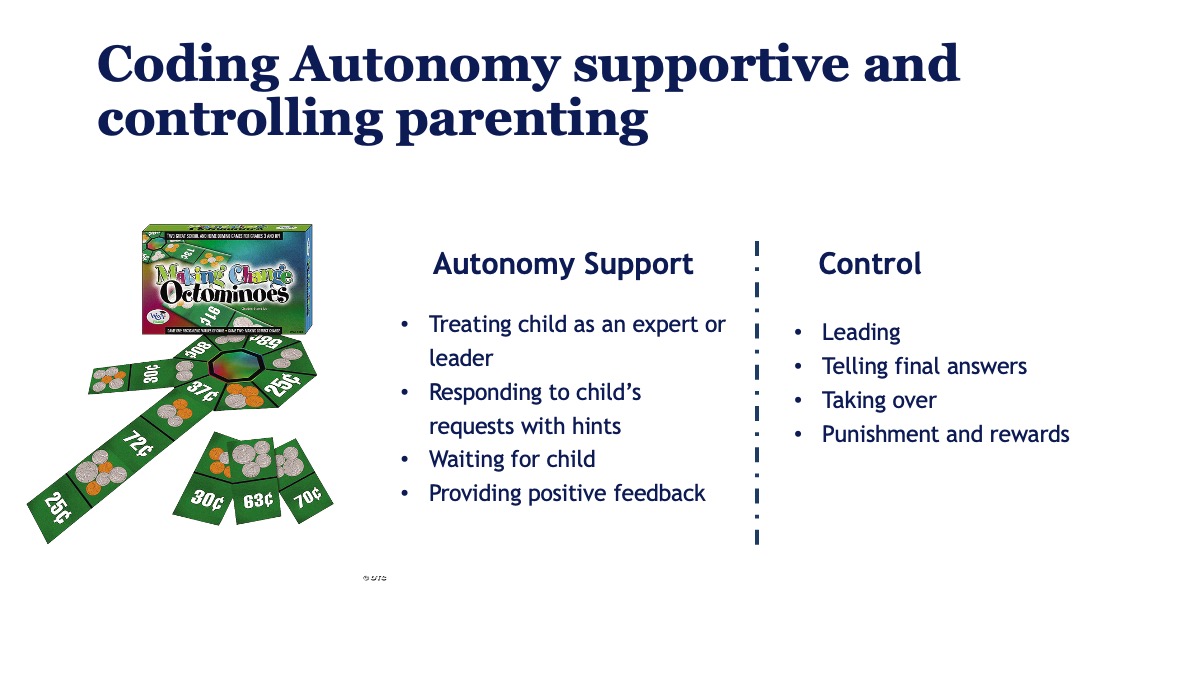
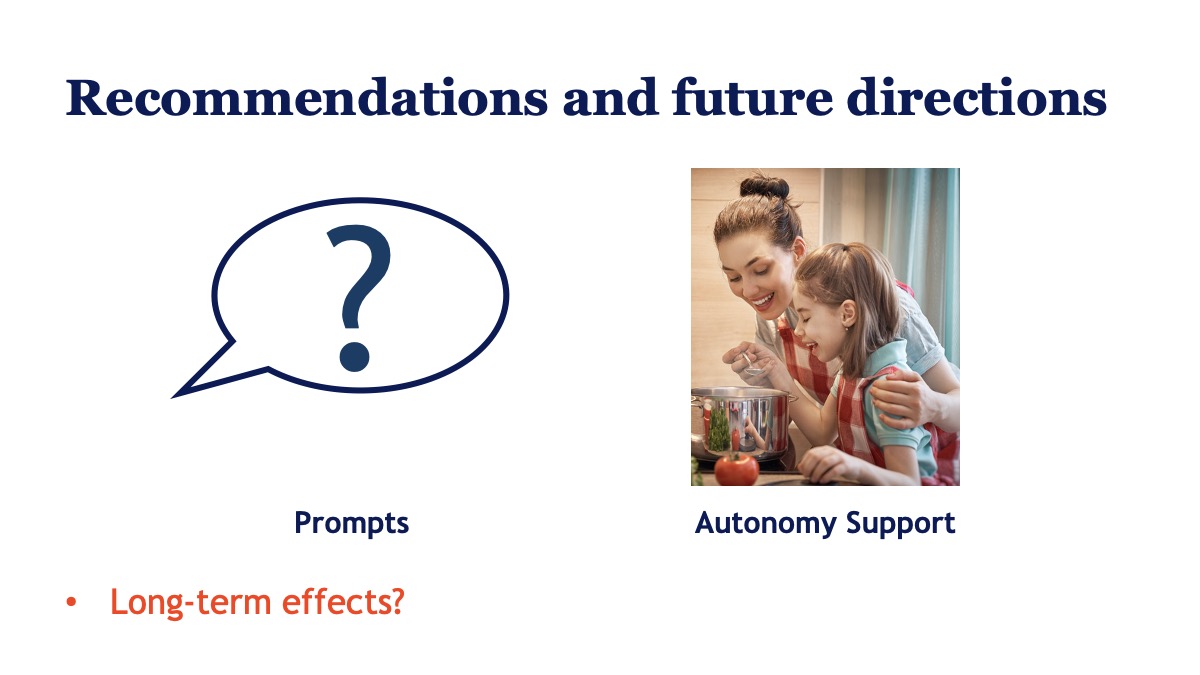
Autonomy support, control, and affect shape whether children approach the task with interest, confidence, and persistence.
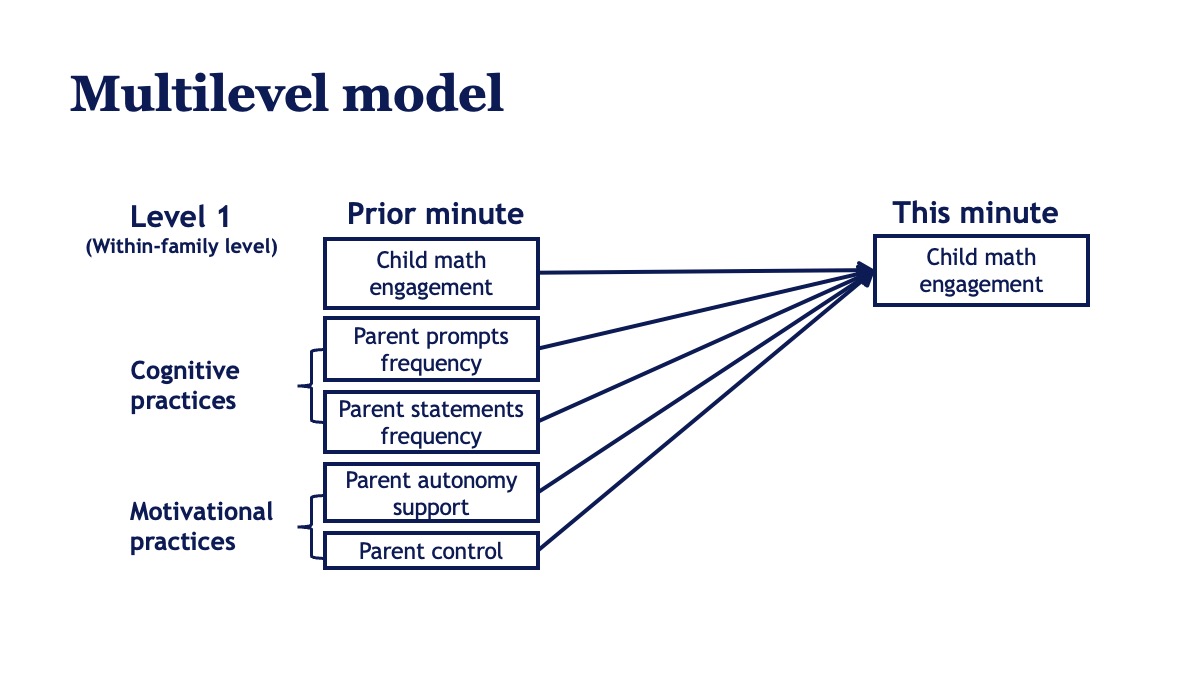
Parent and child behavior influence one another over time, so understanding support requires studying the sequence of interaction.
Studies in the program
Study 1
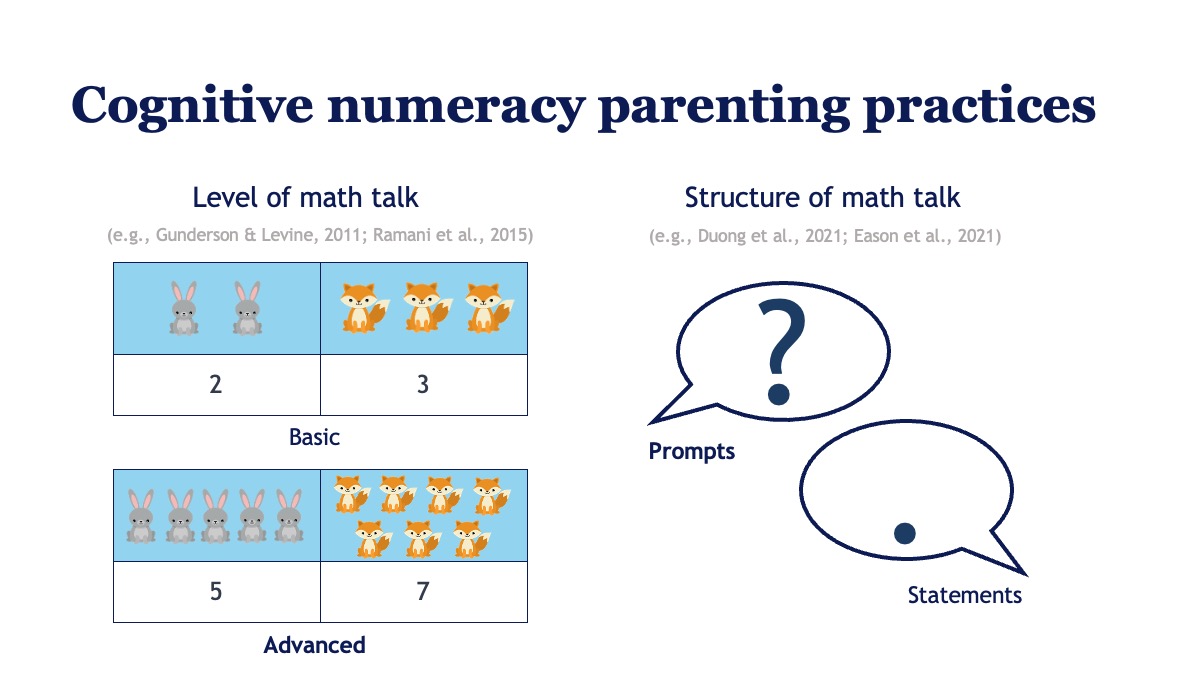
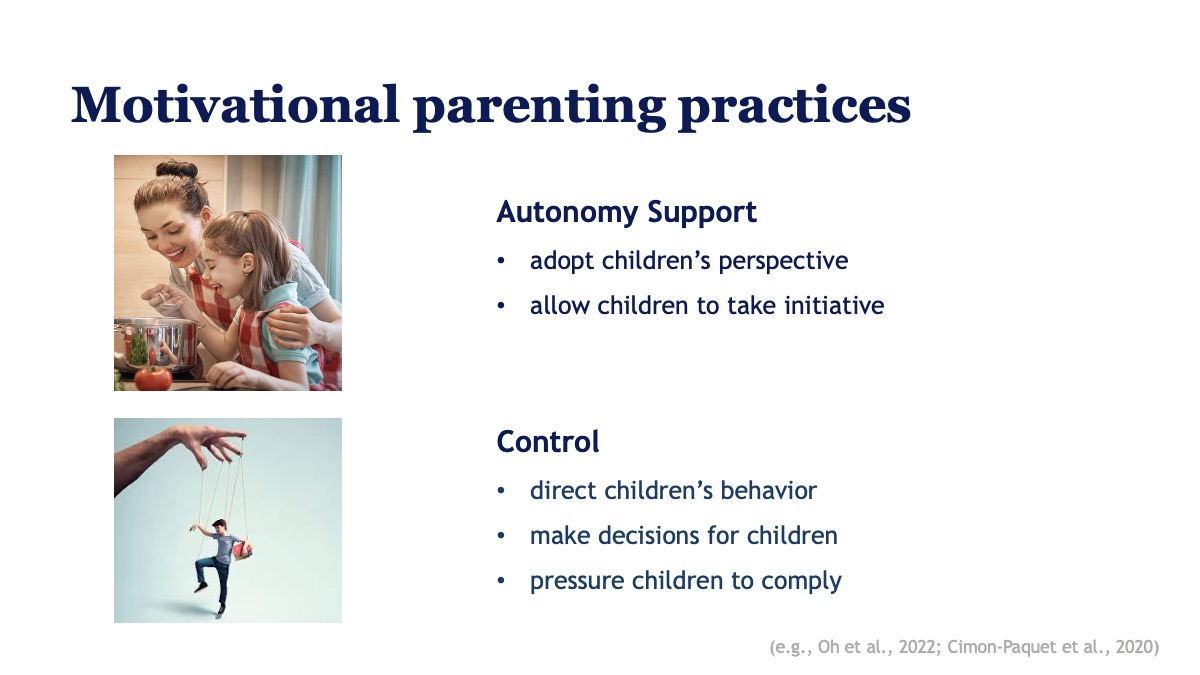
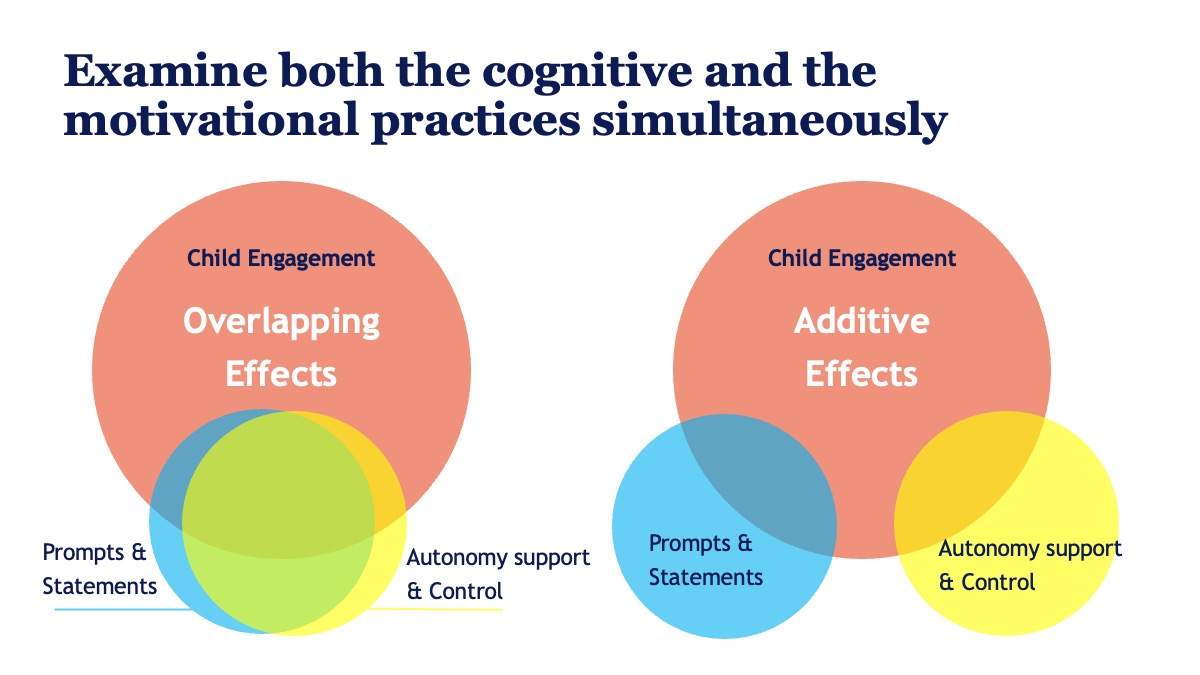
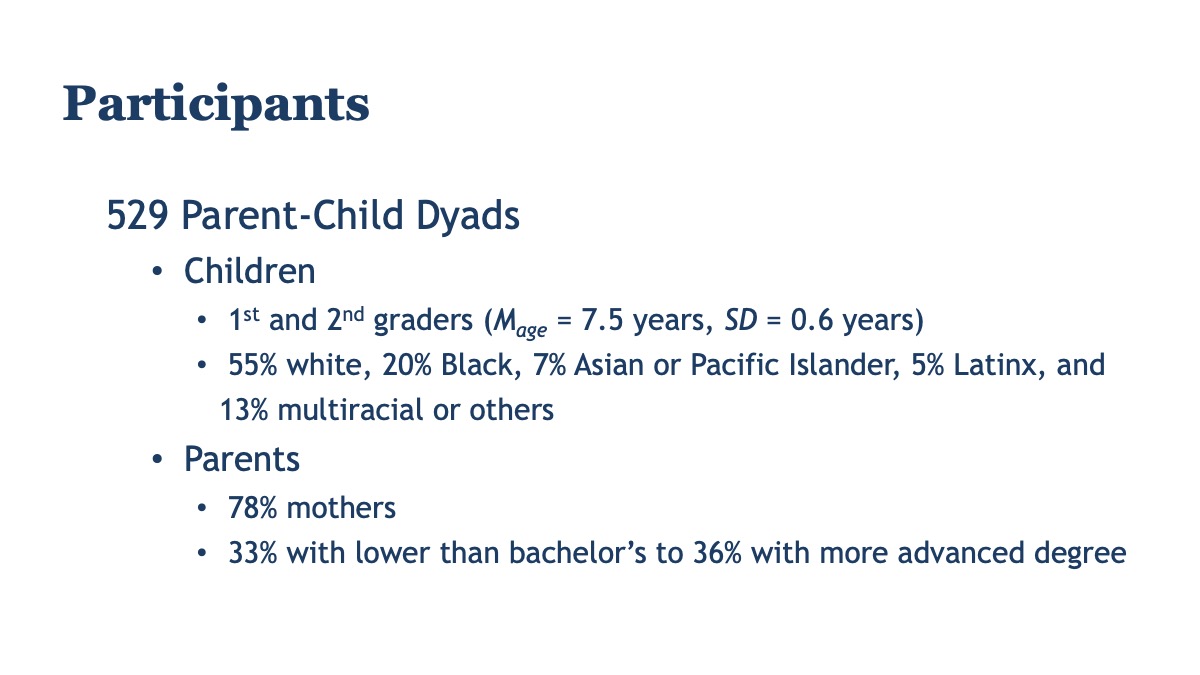
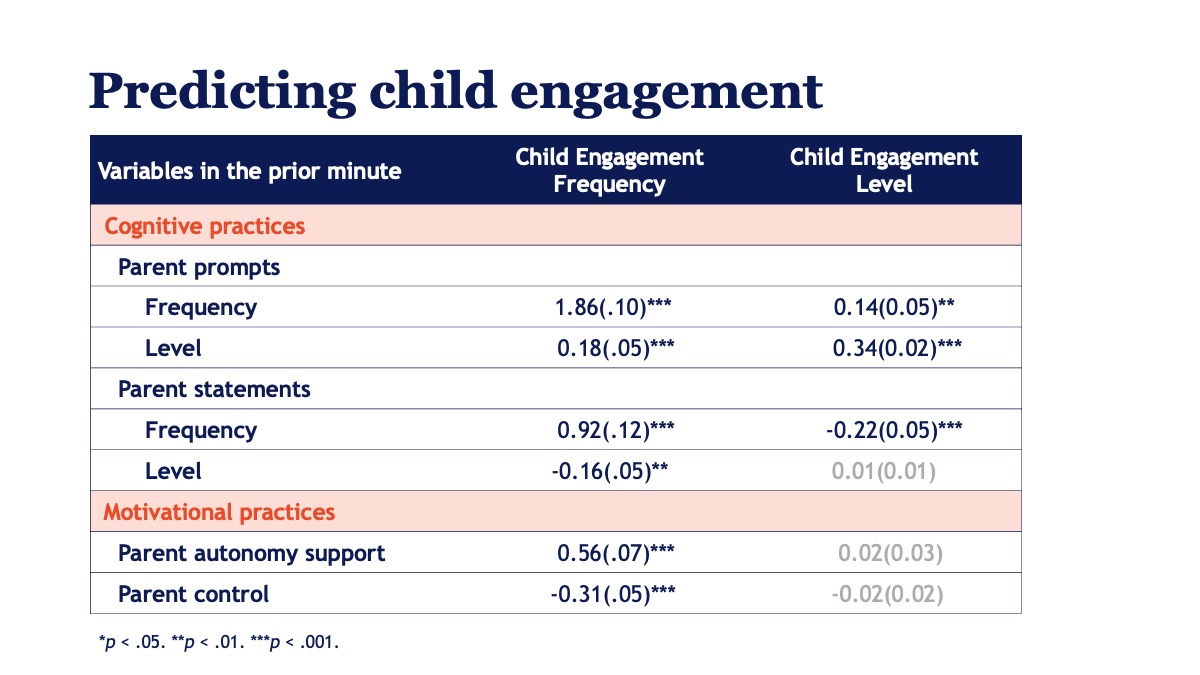
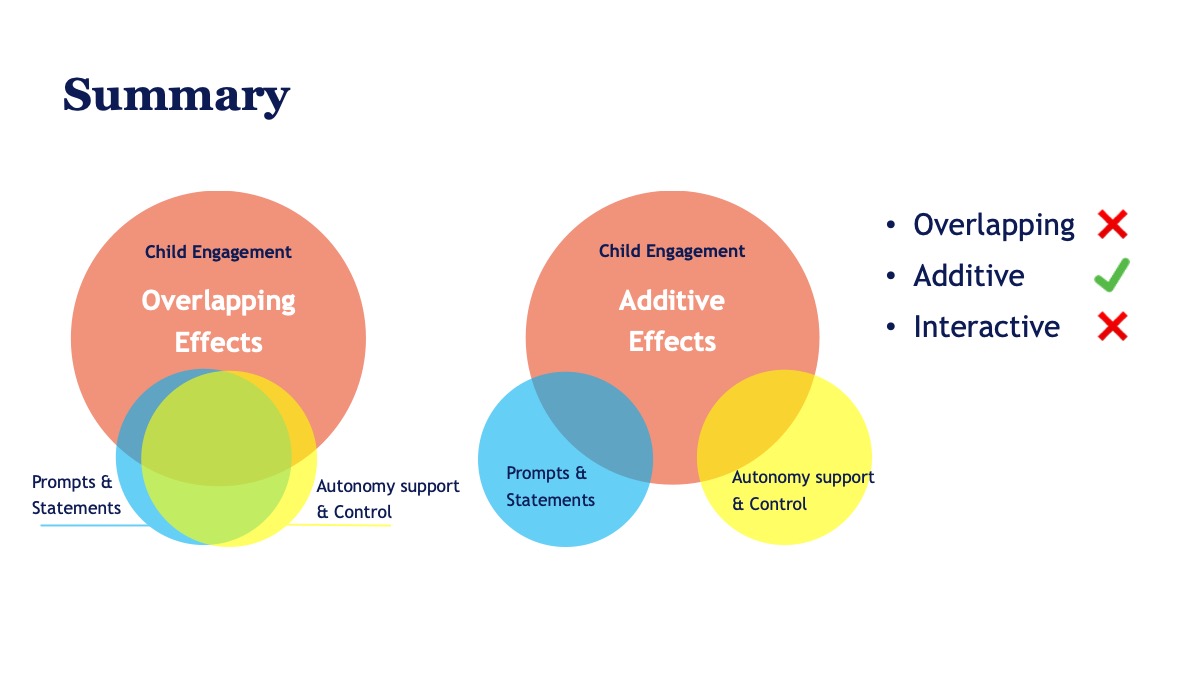
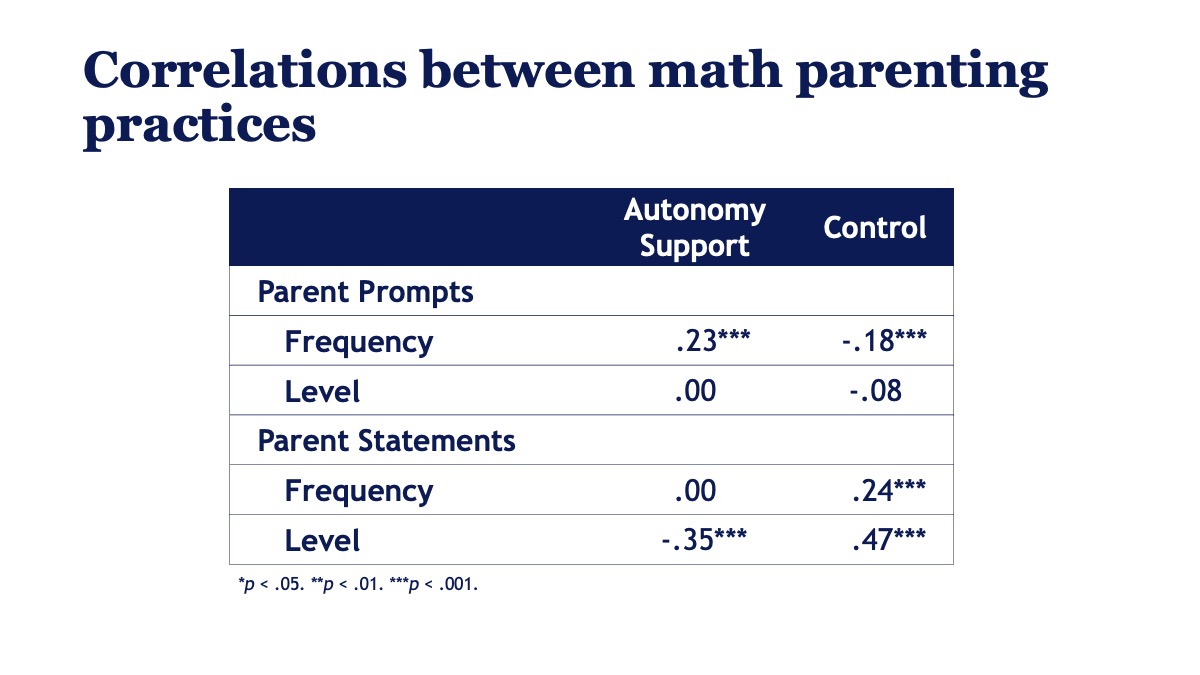
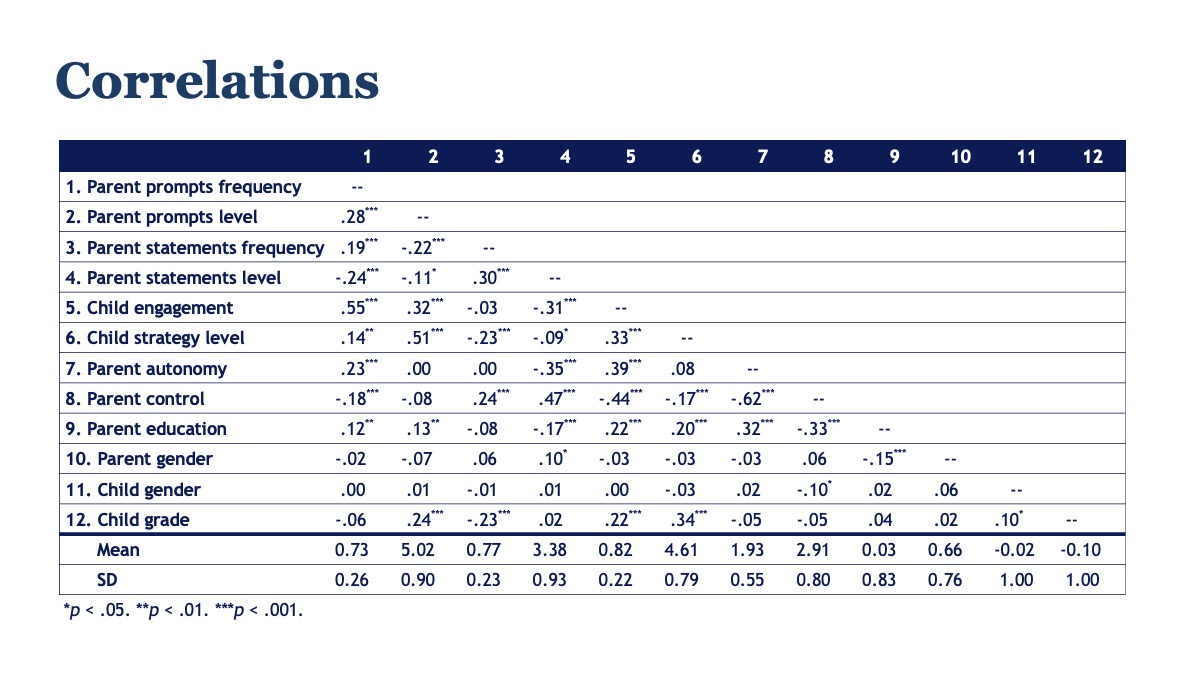
Wu, J., Oh, D., Hyde, D. C., & Pomerantz, E. M. (2024). Cognitive and motivational numeracy parenting practices: Implications for children’s numeracy engagement during early elementary school. Developmental Psychology, 60(4), 680–692. https://doi.org/10.1037/dev0001706
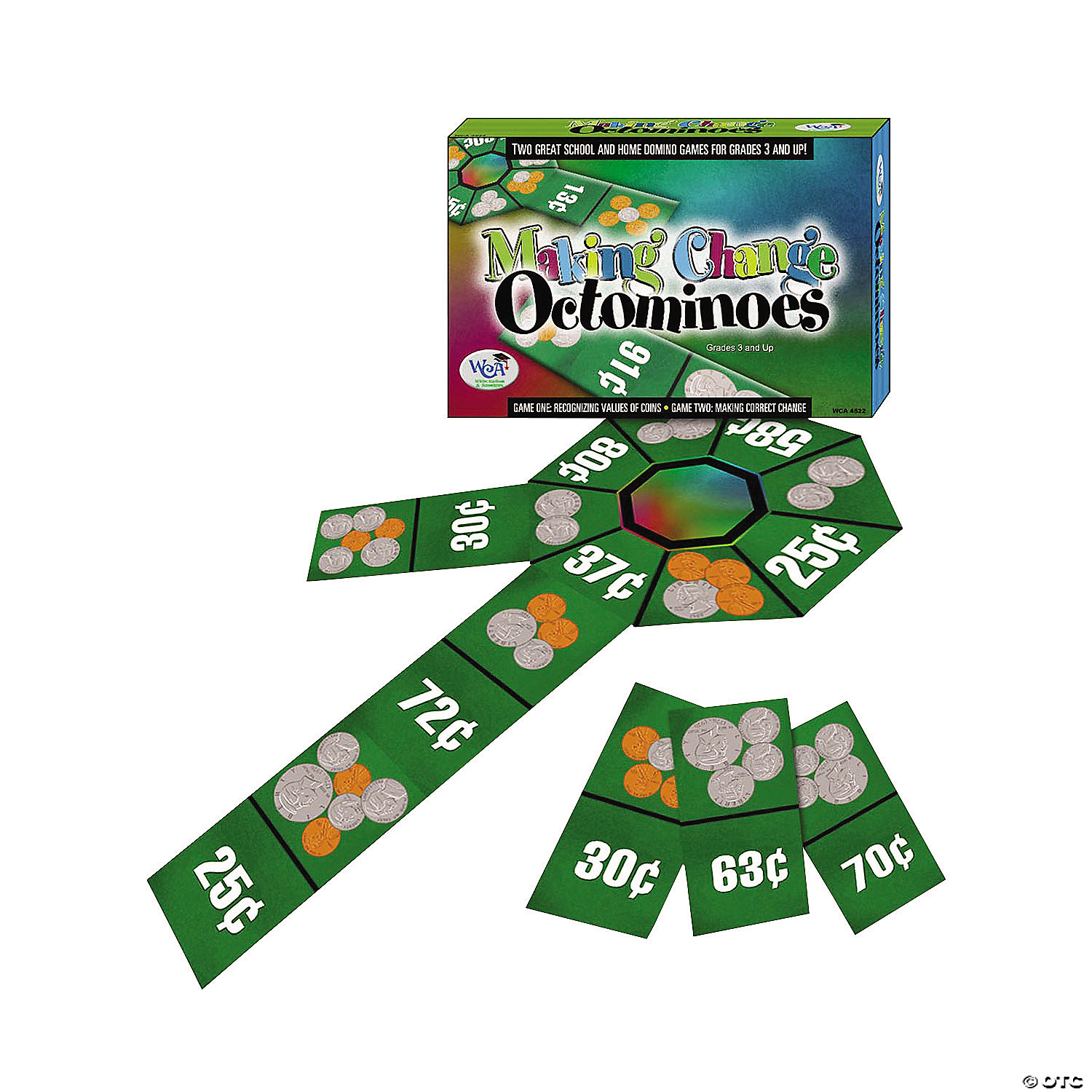
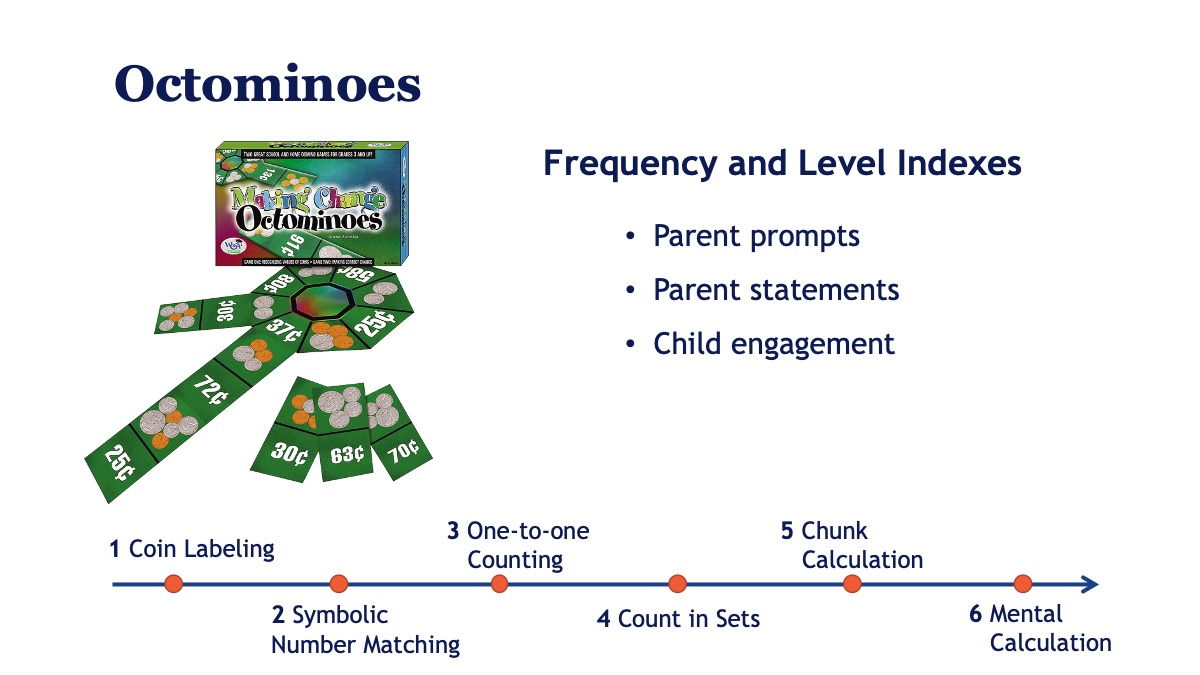
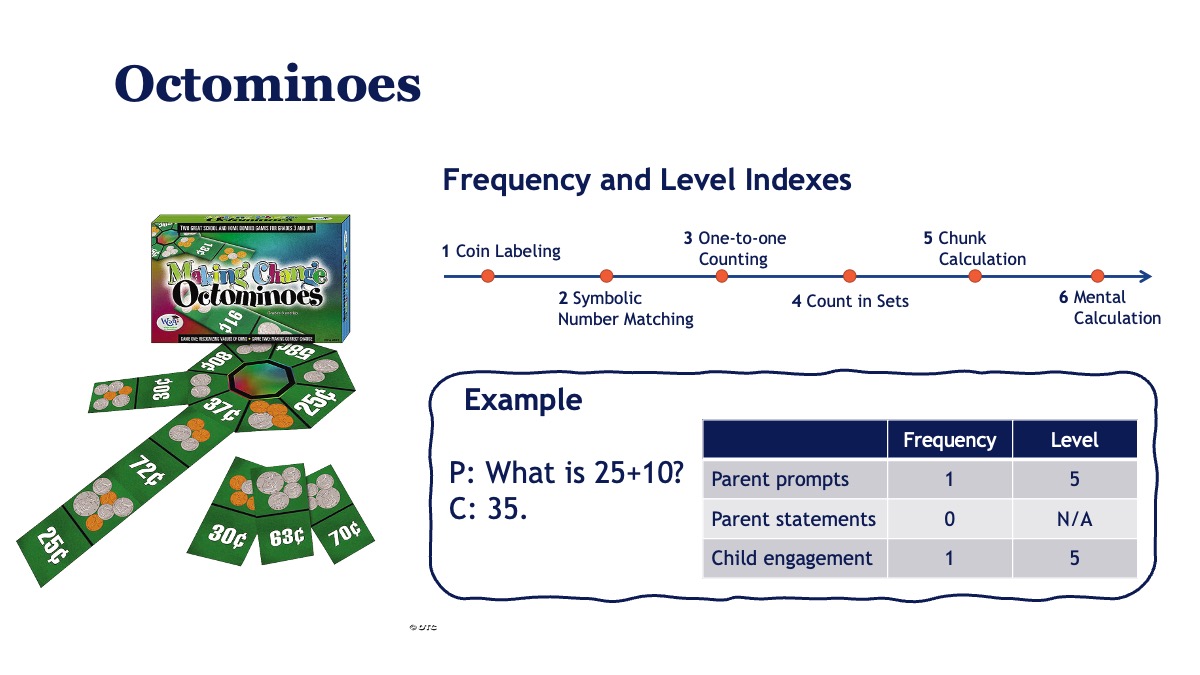
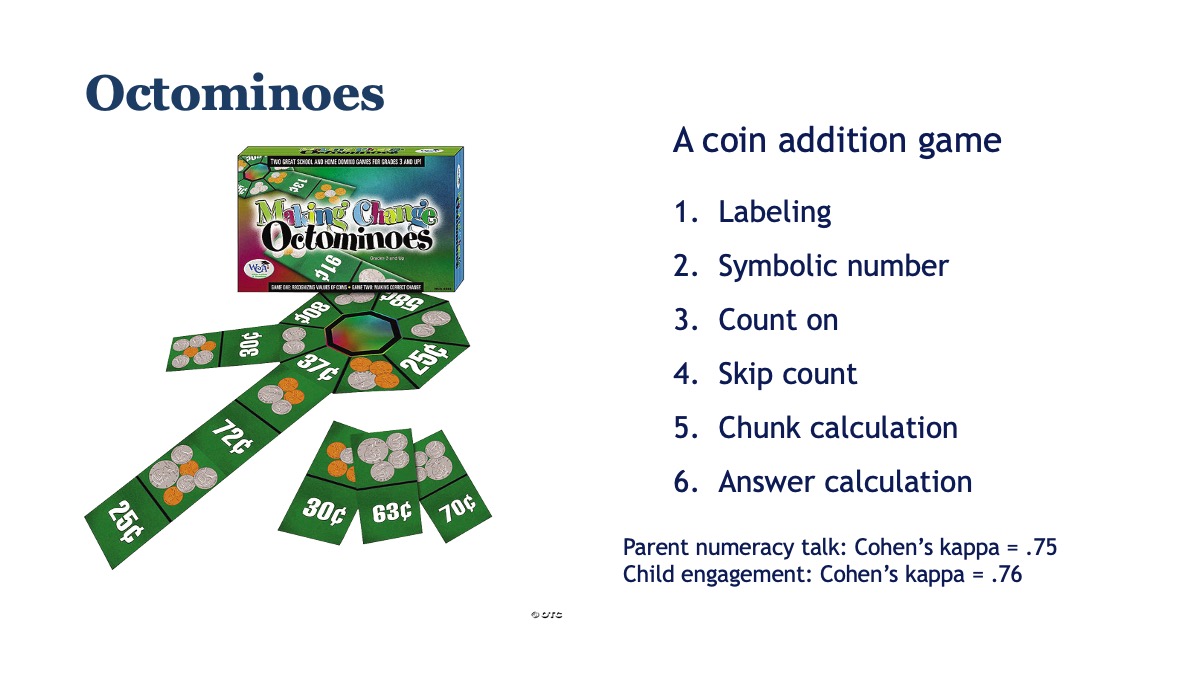
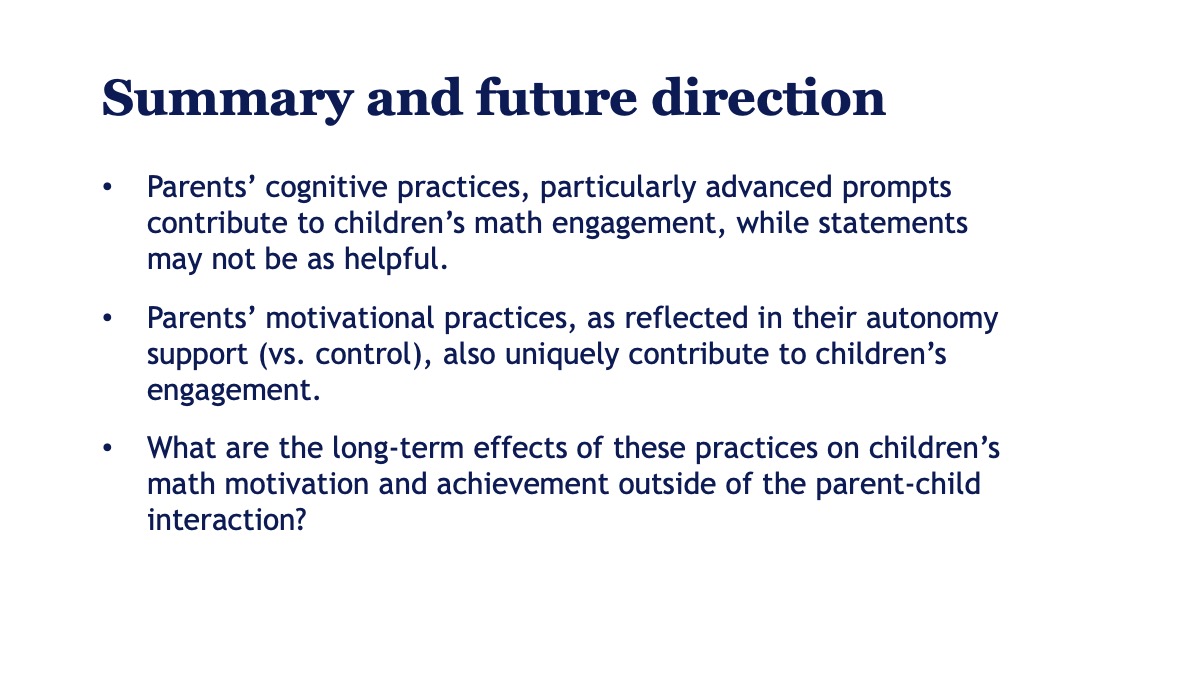
Families completed a structured coin-matching mathematics task. Parent mathematical talk, motivational practices, and children’s engagement were coded across the interaction.
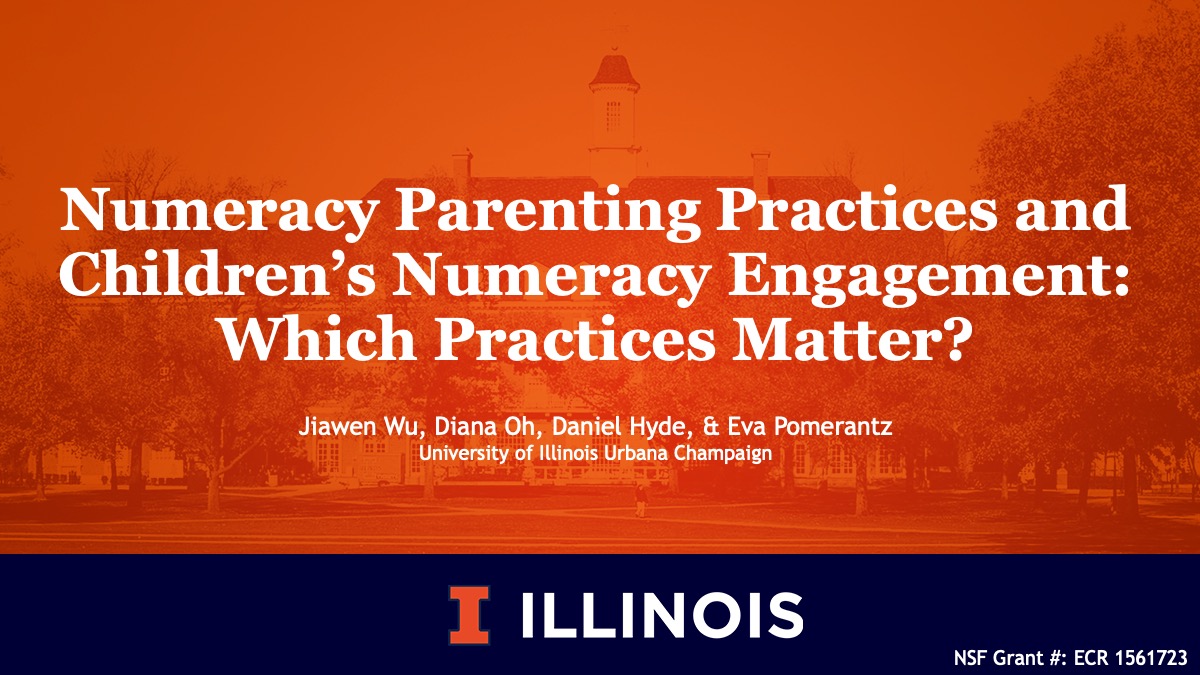
SRCD 2023 conference talk
Wu, J., Oh, D., Hyde, D. C., & Pomerantz, E. M. (April 2023). Numeracy Parenting Practices and Children’s Numeracy Engagement: Which Practices Matter? Symposium talk presented at the Society for Research in Child Development 2023 Biennial Meeting.
Study 2
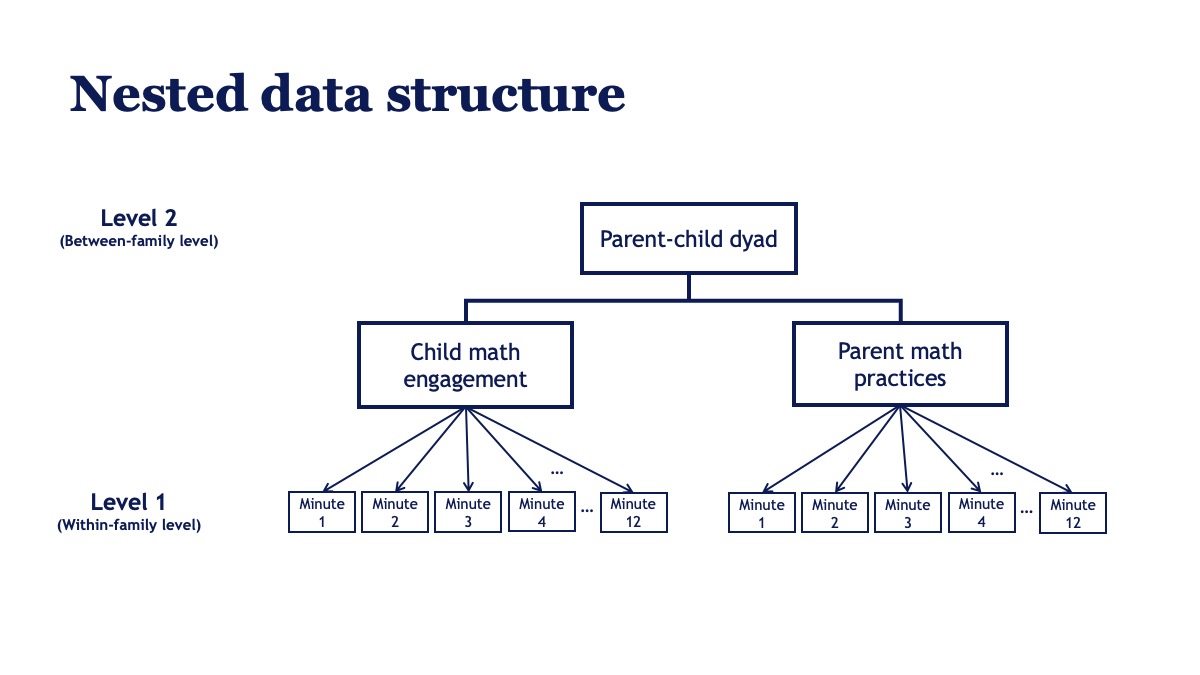
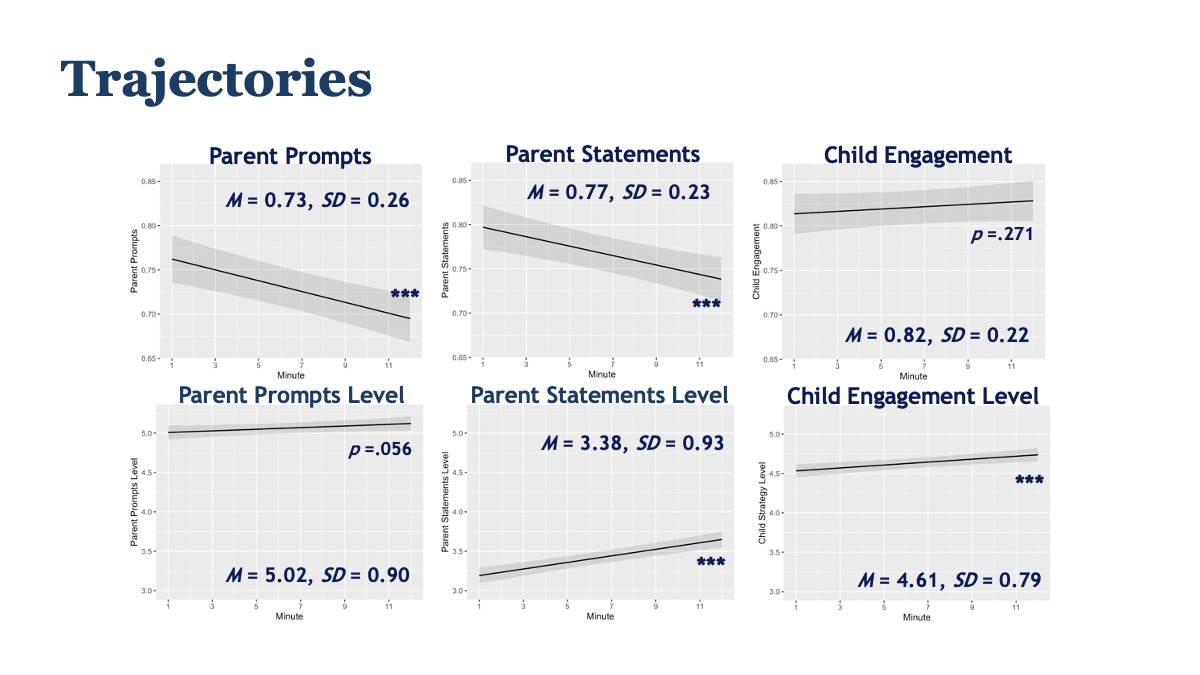
This project examines how parents support children during time-limited online mathematics work. Parents’ and children’s mathematics talk was coded at the sentence level, while parents’ autonomy support versus control and both partners’ positive versus negative affect were coded each minute to capture how these practices unfold in real time.
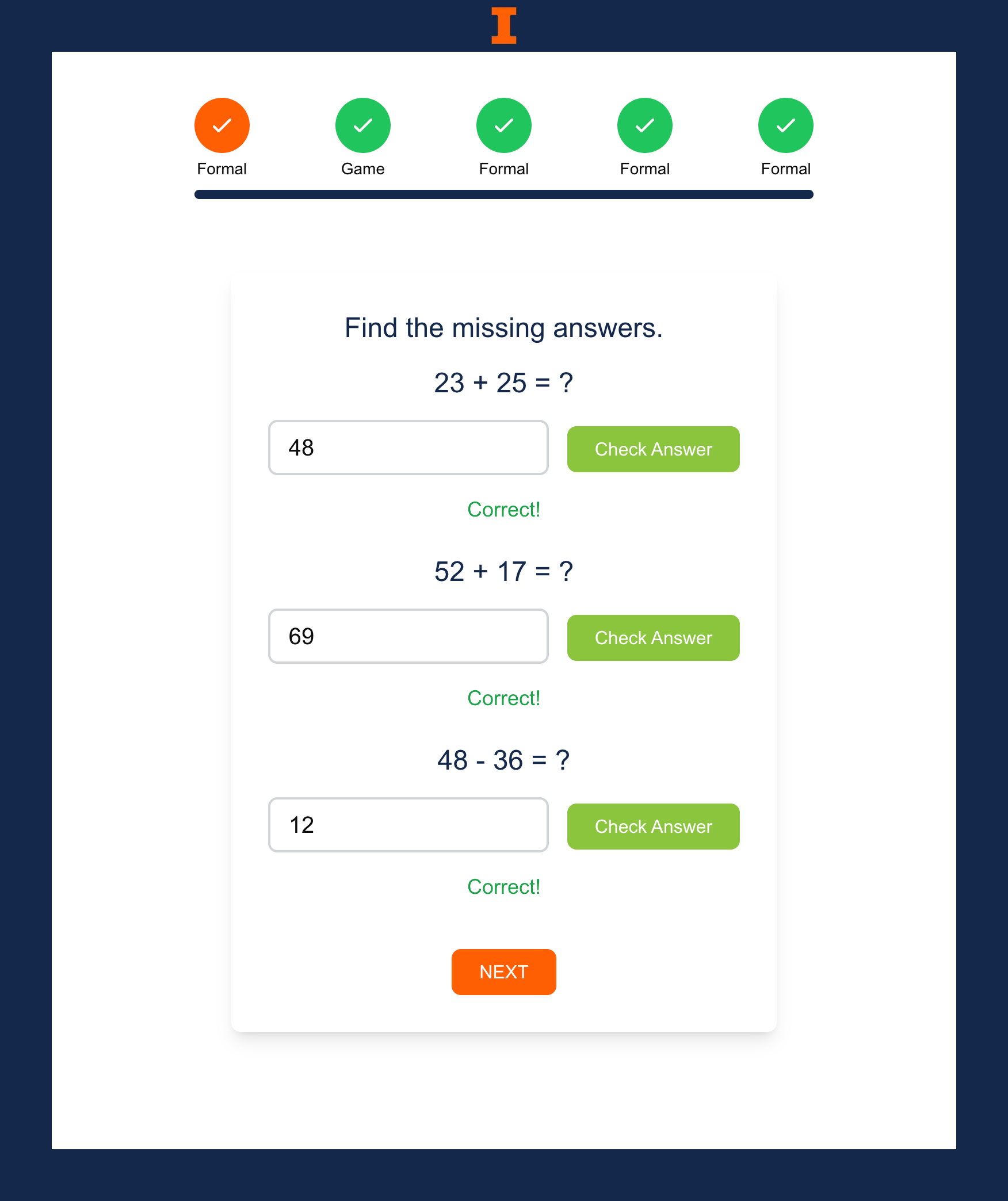
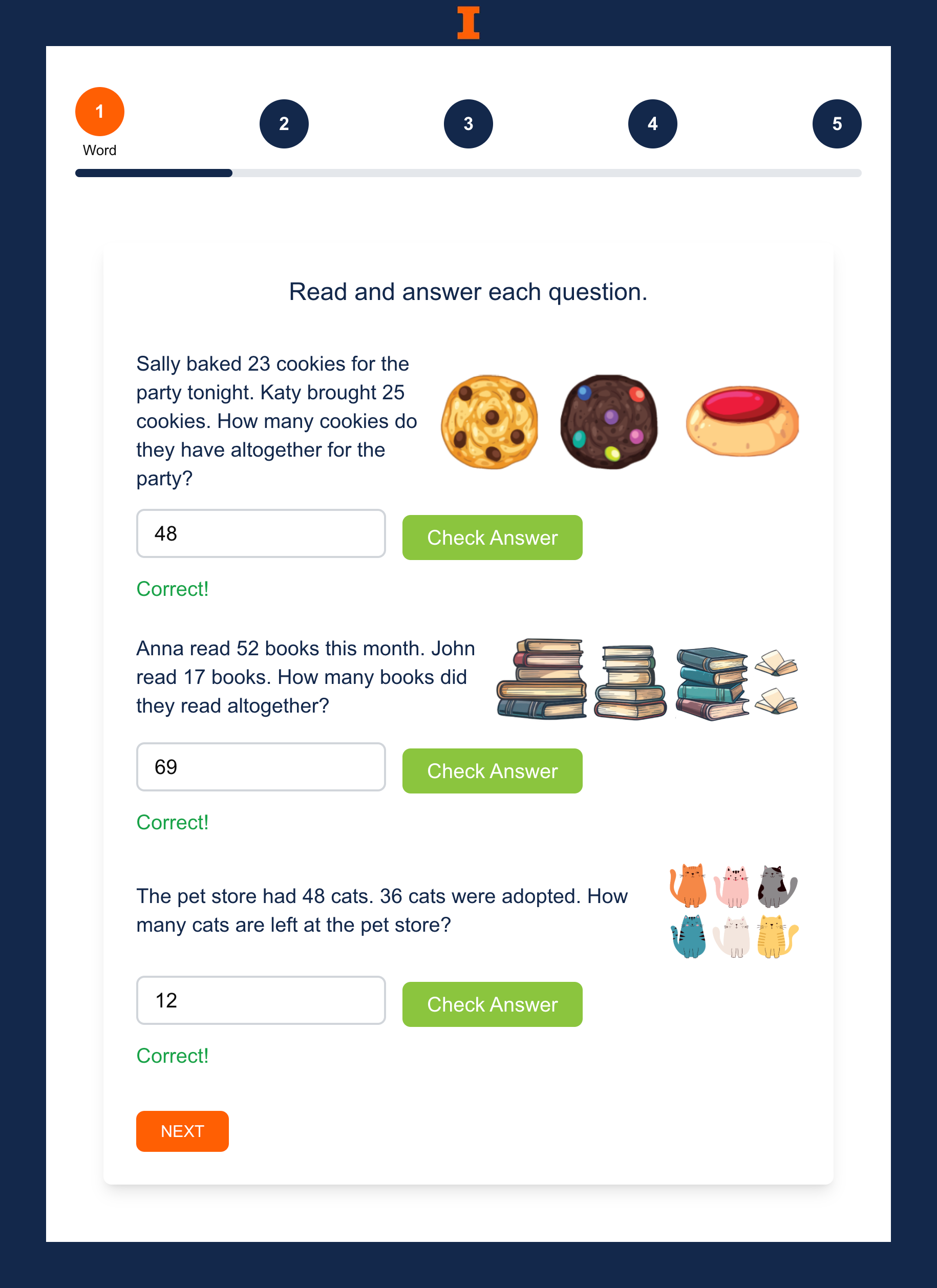
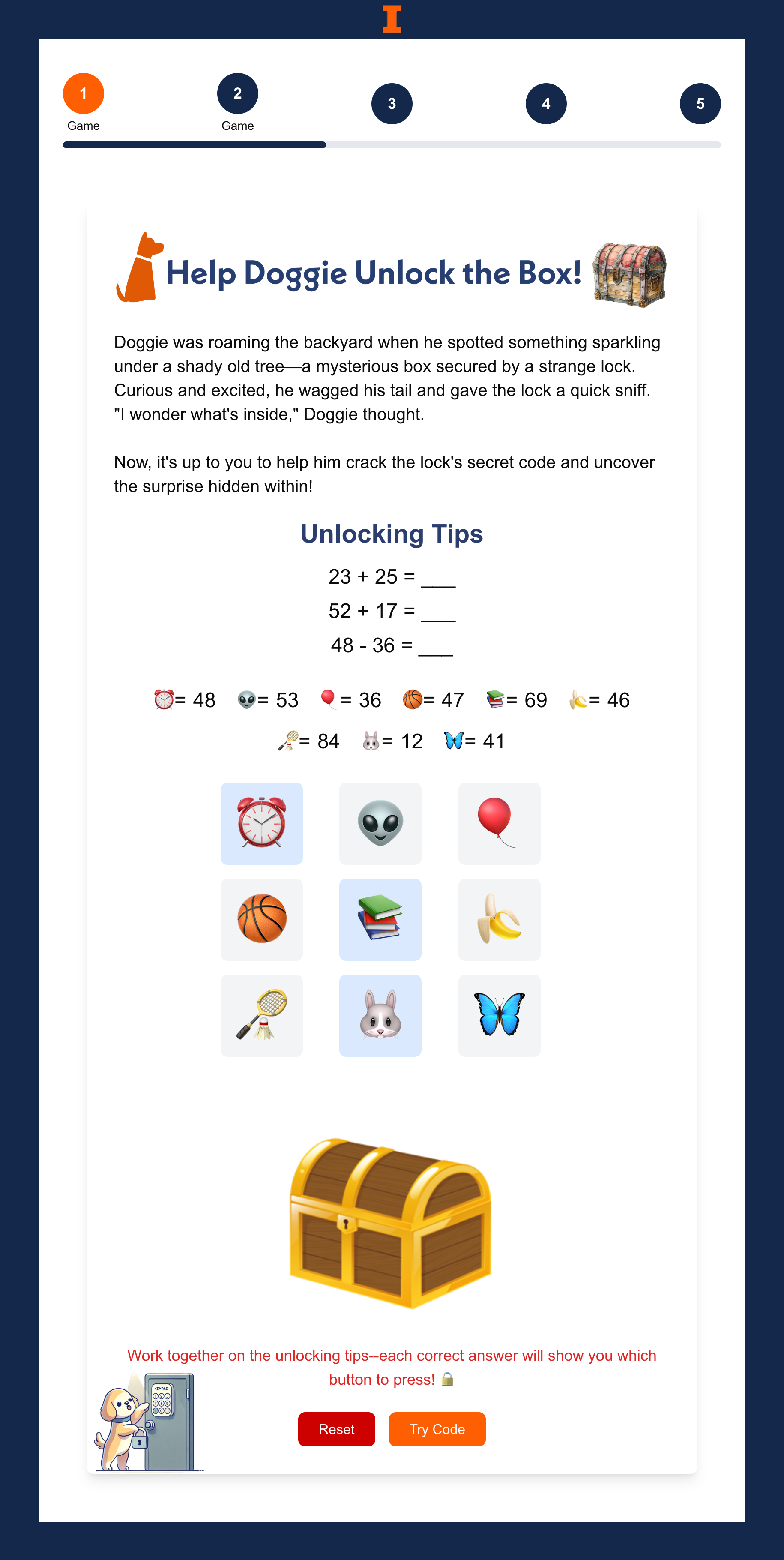
The research platform presented five rounds of developmentally appropriate, multi-digit addition and subtraction in three equivalent formats: formal numerical problems, contextualized word problems, and interactive puzzle-based activities. Dyads in the Choice condition selected the format for each round, while yoked No-Choice dyads completed the identical sequence without making selections.
AERA 2026 poster
Wu, J., Zhang, L., & Jia, Y. (April 2026). Minute by Minute: Unfolding Patterns of Parental Behaviors in Math Homework Help. Poster presentation at the American Educational Research Association 2026 Annual Meeting.
This poster was developed with undergraduate students I mentored and offers a public preview of the project.
Study 3
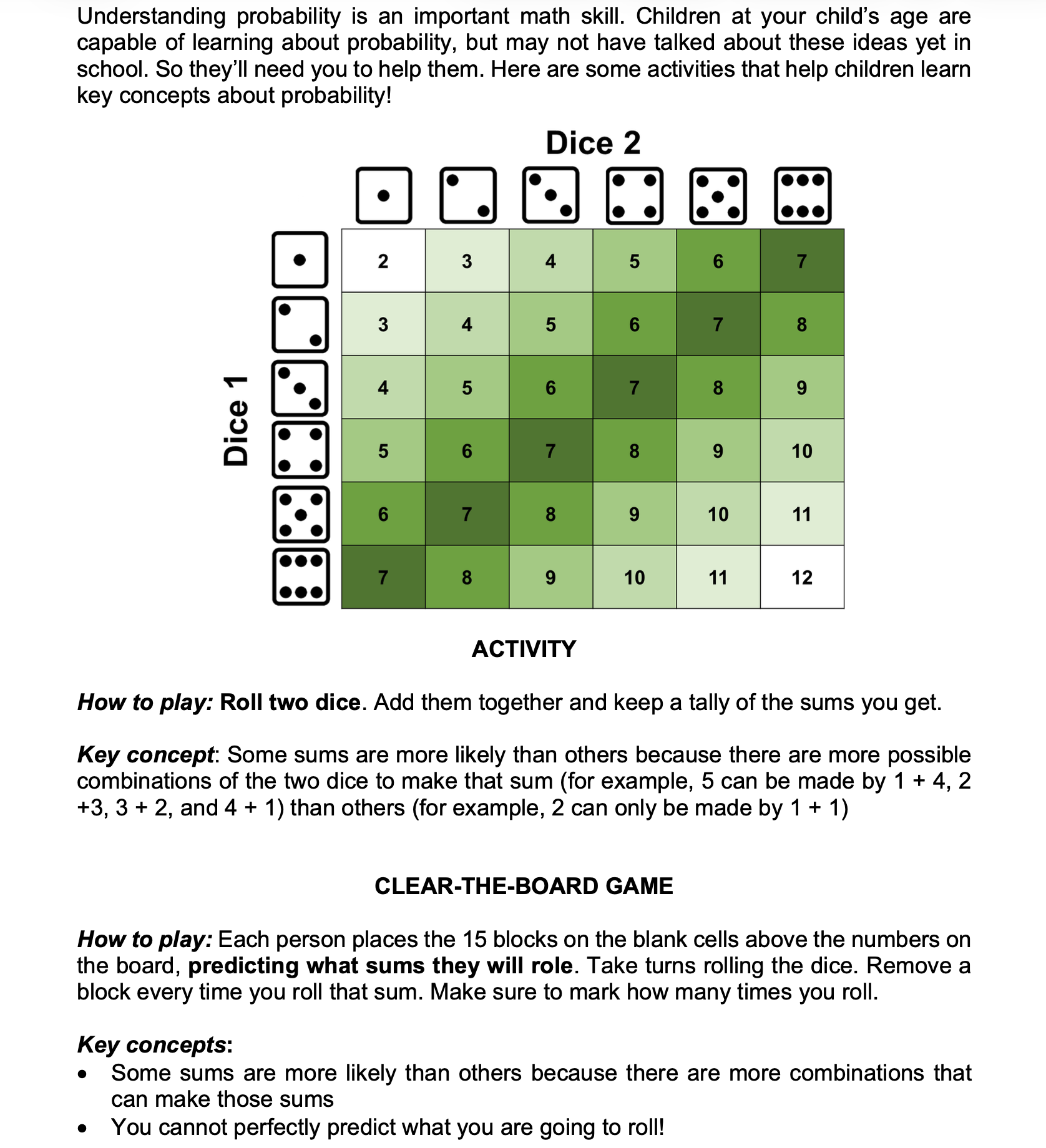
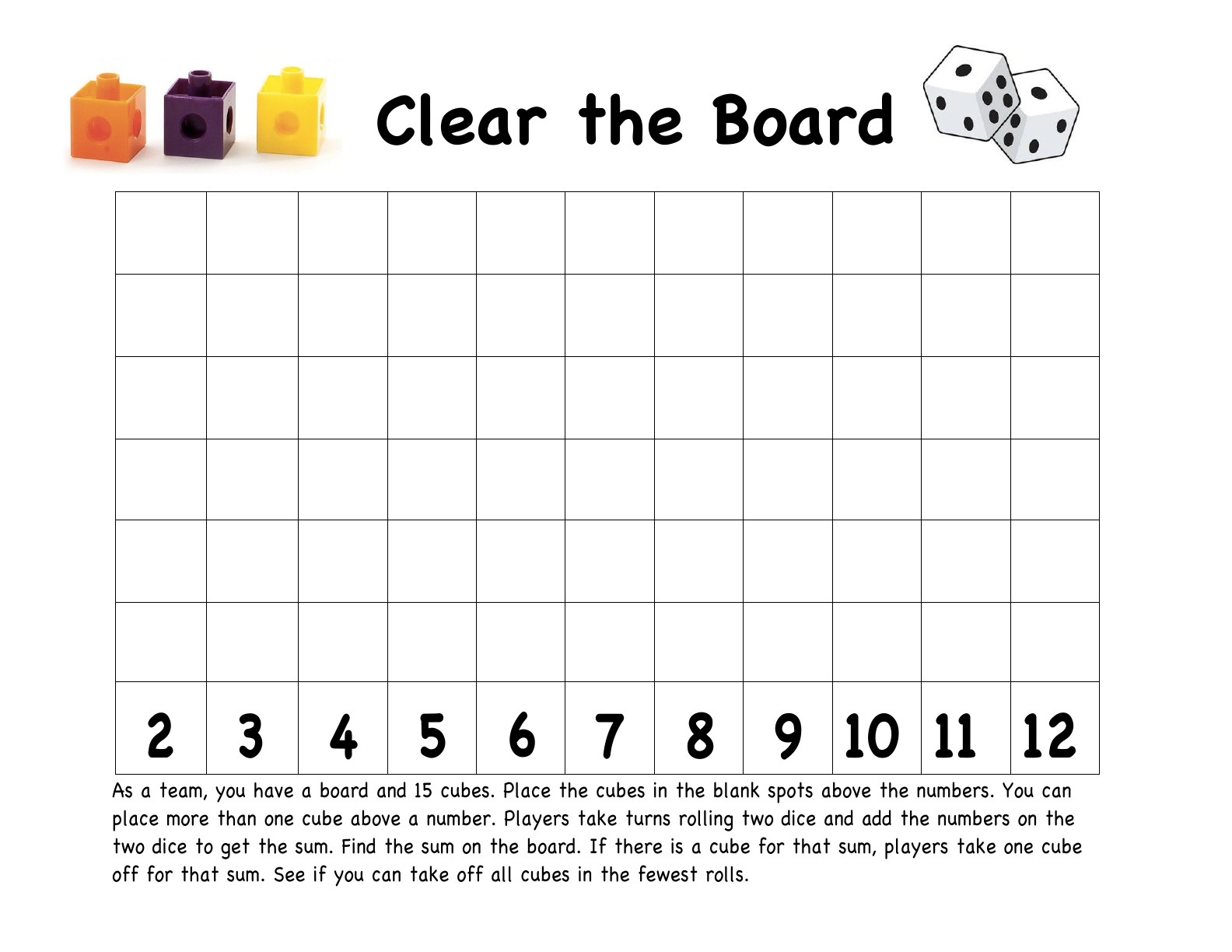
This study examines how parents and children coordinate emotion, support, and engagement while learning an unfamiliar mathematics concept through a collaborative probability task.
AERA 2025 conference output
Song, Y., Wu, J., & Barger, M. M. (April 2025). Parents’ Positive Emotional Affect is Infectious in Dyadic Math Interaction. Symposium talk presented at a paper session at the American Educational Research Association 2025 Annual Meeting.
Study 4
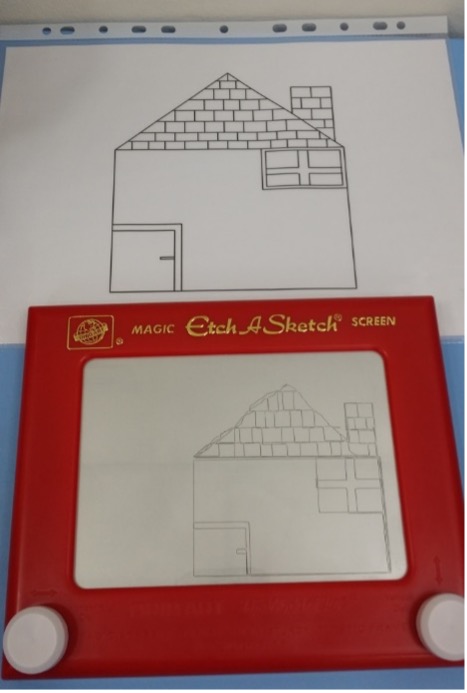
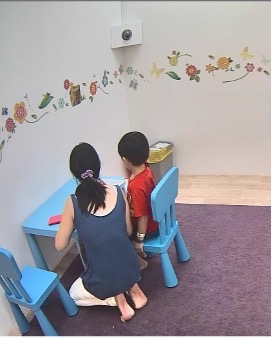
This project studies how parents and young children coordinate spatial and mathematical thinking during a shared Etch-a-Sketch task in Singapore. Each partner operates one knob—one controlling horizontal movement and the other vertical movement—and the dyad works together to reproduce a detailed house template within ten minutes. The task requires continuous coordination, communication, and joint problem solving.
Behavioral coding systems
Sentence-level codes identify mathematical content, prompts, explanations, and strategy-related talk.

Minute-level codes capture positive and negative emotional expressions from both members of the dyad.

Codes distinguish support for children’s initiative and perspective from pressure, direction, and taking over.
Research design
Structured tasks create a common problem while preserving natural variation in family interaction.
Behavioral codebooks capture mathematics talk, autonomy support, control, affect, and child engagement.
Repeated intervals reveal trajectories and reciprocal changes beyond global ratings.