How Families Shape Children's Learning in the AI Era
I study how families make sense of AI together, how parents' own experiences with and beliefs about AI shape the messages they send their children, and how the alignment or mismatch between parent and adolescent AI beliefs shapes young people's learning, reliance, and future readiness.
Family AI beliefs
Survey research
Qualitative interviews
Mixed methods
Families may soon need a shared language for understanding what AI can—and cannot—do.
Program overview
The family is where children's AI use first takes shape.
What a new technology does for—or to—a child depends less on the technology than on the adults beside her. This program treats the family as the primary environment in which children's AI use takes shape and follows that question across two developmental periods and two methodological lenses.
Early childhood · ages 9–11
AI inside a shared learning task
The question is immediate and behavioral: when parents and children work together on a hard problem, does AI become a scaffold for thinking or a shortcut that makes effort optional? Parental scaffolding, performance pressure, and the moment-to-moment choices families make around the chatbot are the variables that matter.
Late adolescence · ages 17–20
Beliefs, alignment, and future readiness
The same question extends across time: how do the beliefs parents and teenagers hold about AI, and whether those beliefs align, shape motivation, cognitive strategies, and readiness for an uncertain future?
Study 1
University students’ experiences of learning with AI
Ongoing · Public conference outputs
MethodUniversity students in SingaporeSurvey researchQualitative interviewsMixed methods
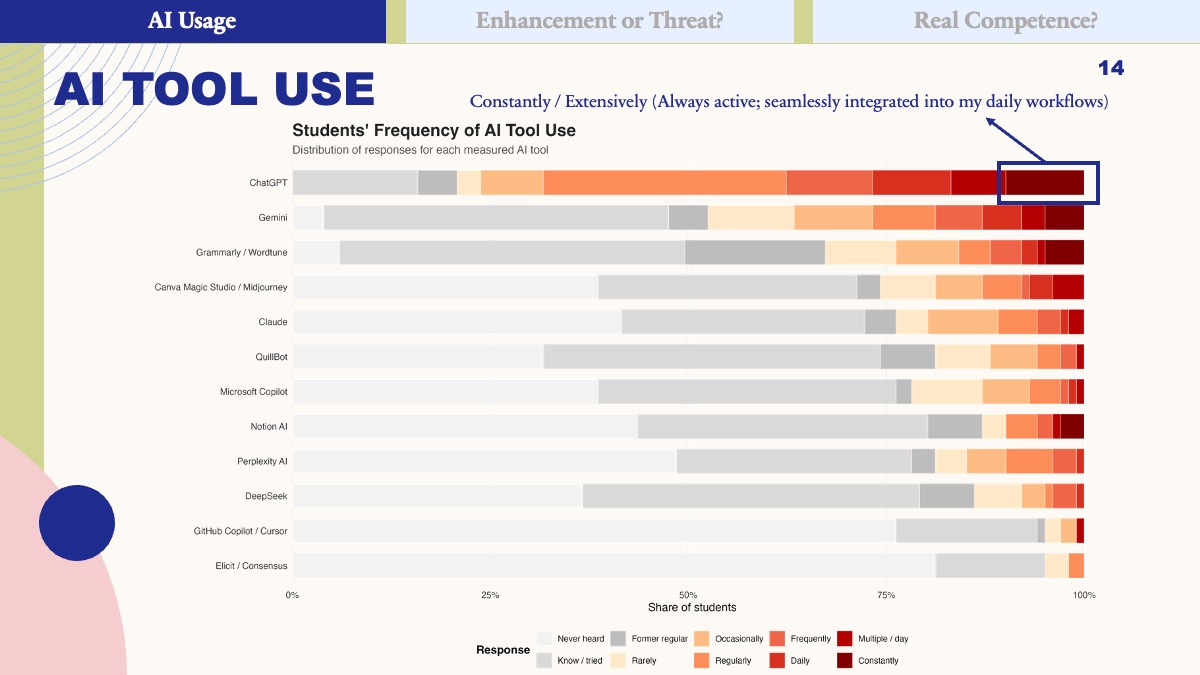
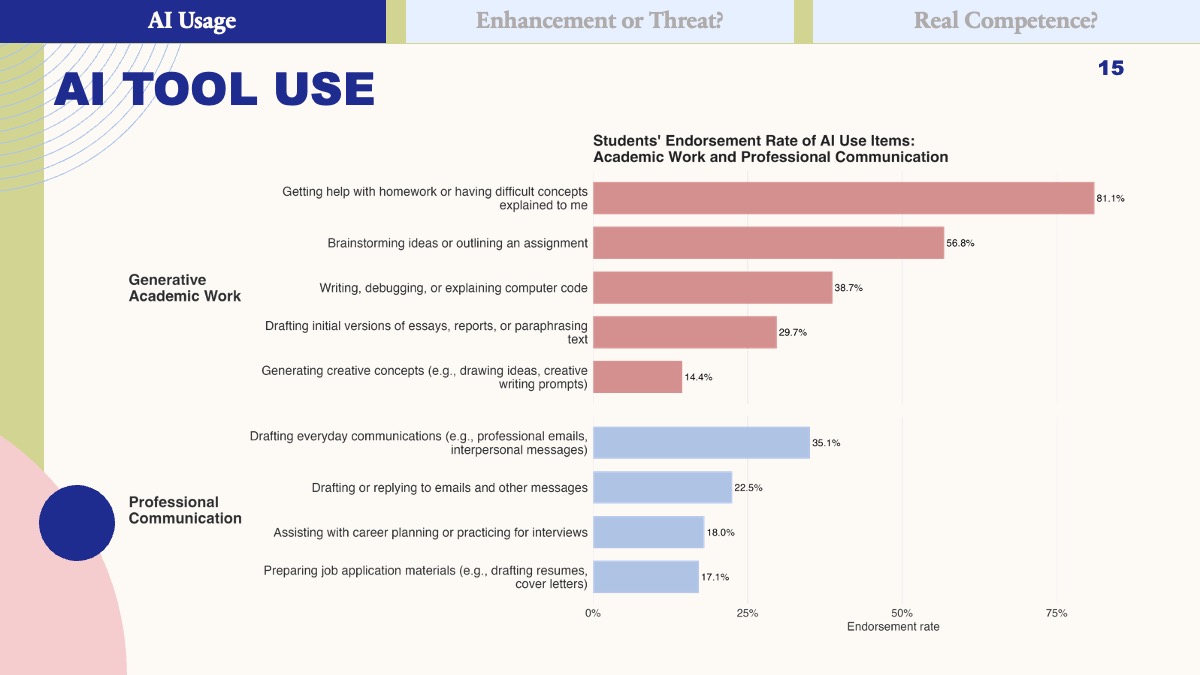
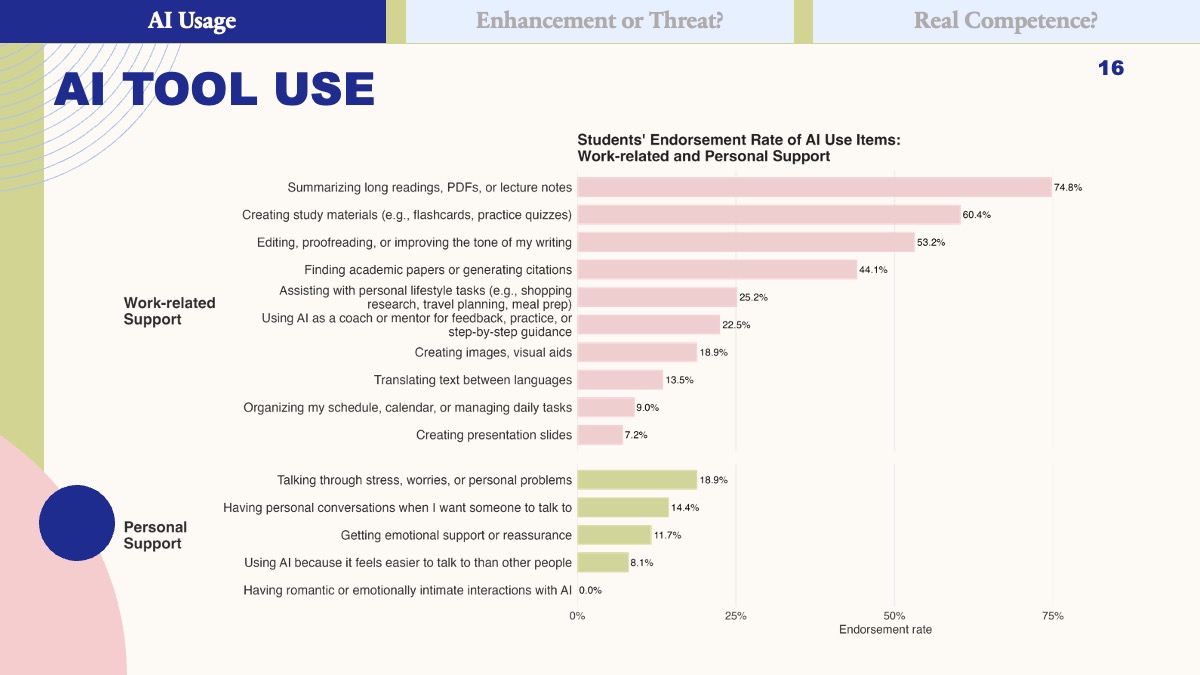
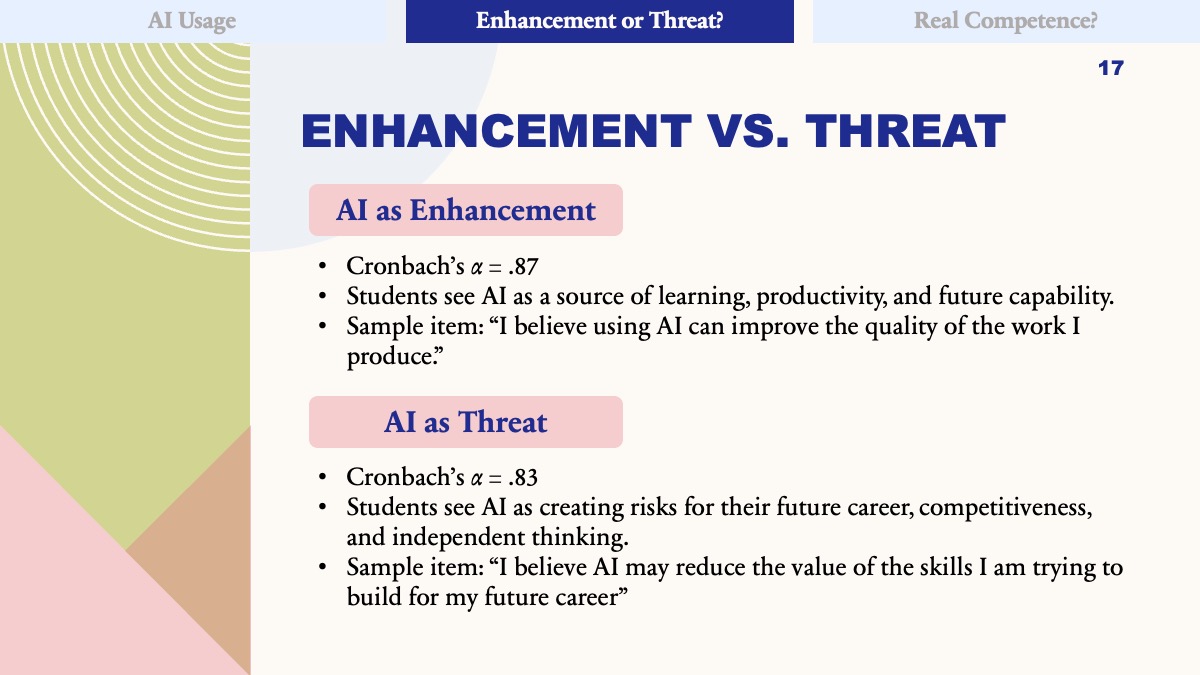
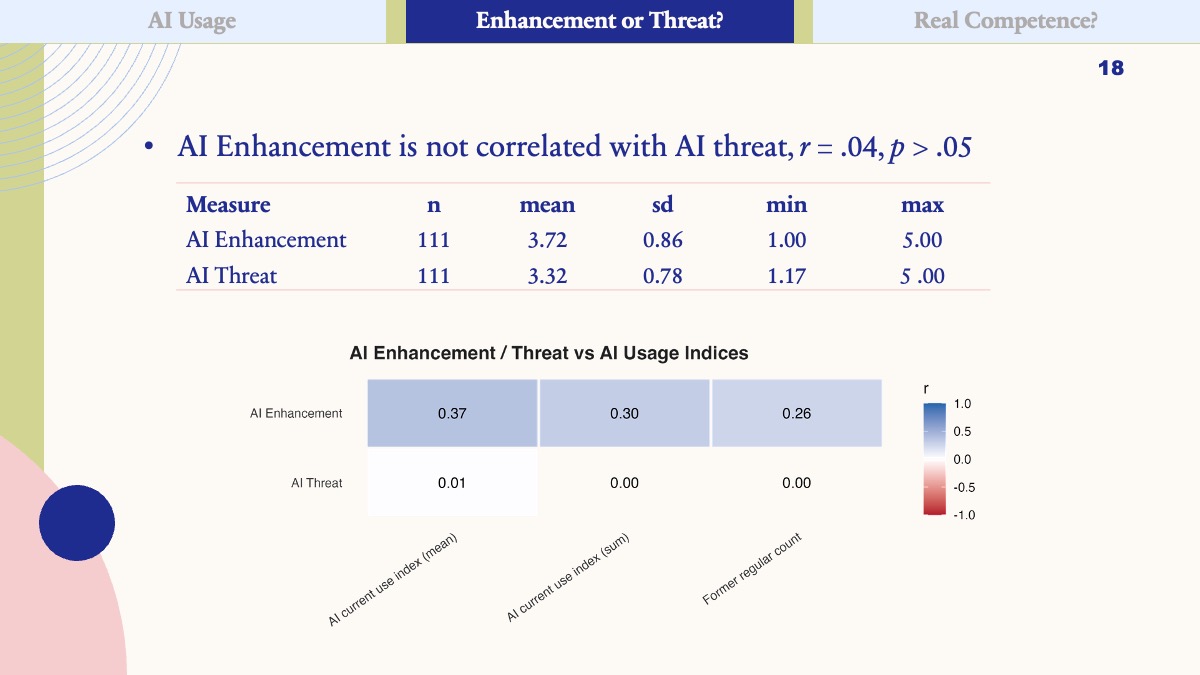
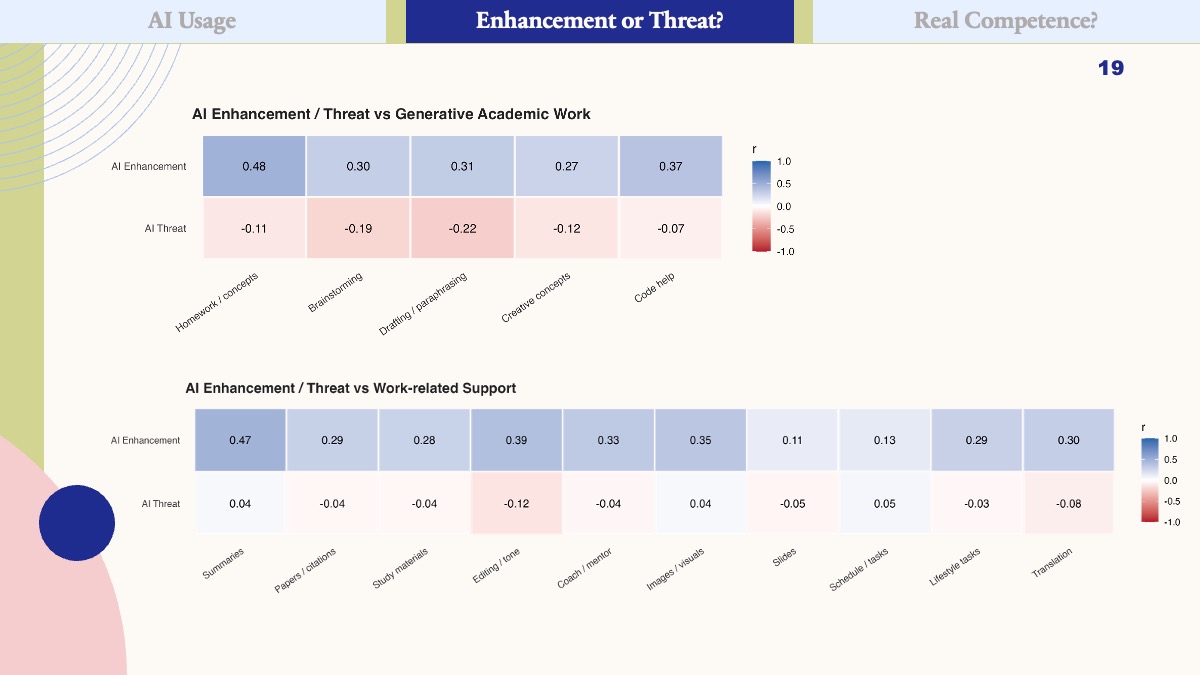
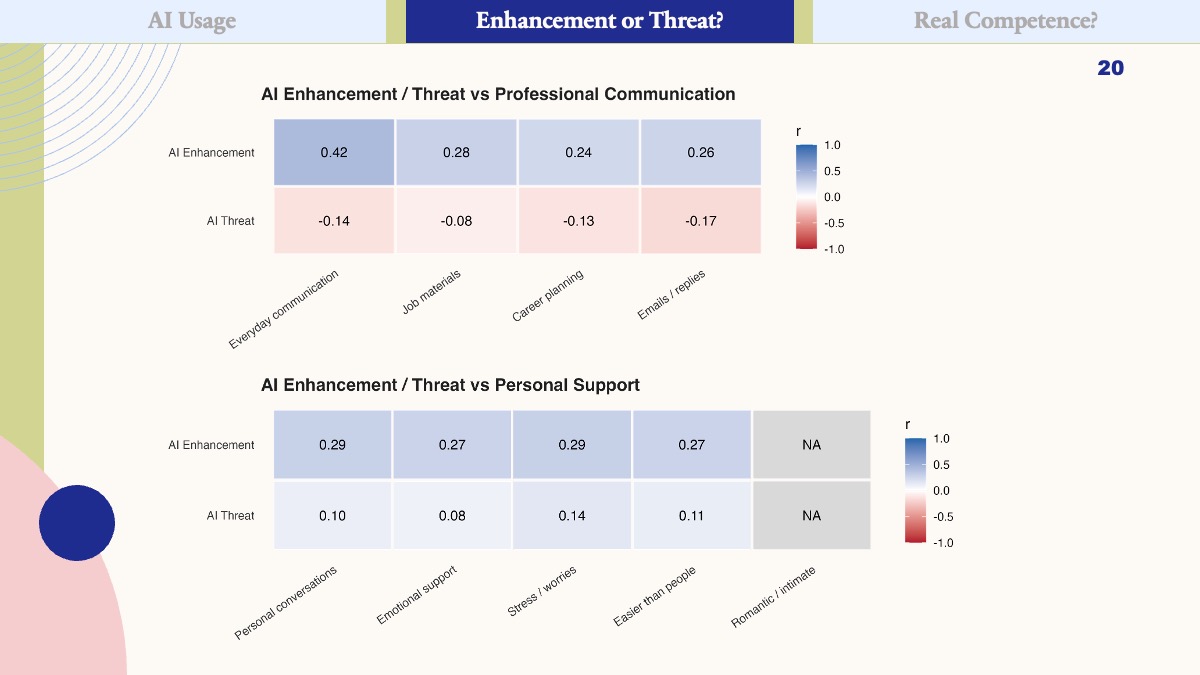
This study mapped which AI tools students used, what they used them for, and whether they saw AI as enhancing their capabilities or threatening valued human capacities. The interview component explores how students make sense of AI in their academic lives, including learning, pressure, trust, authenticity, boundaries, and their expectations for the future.
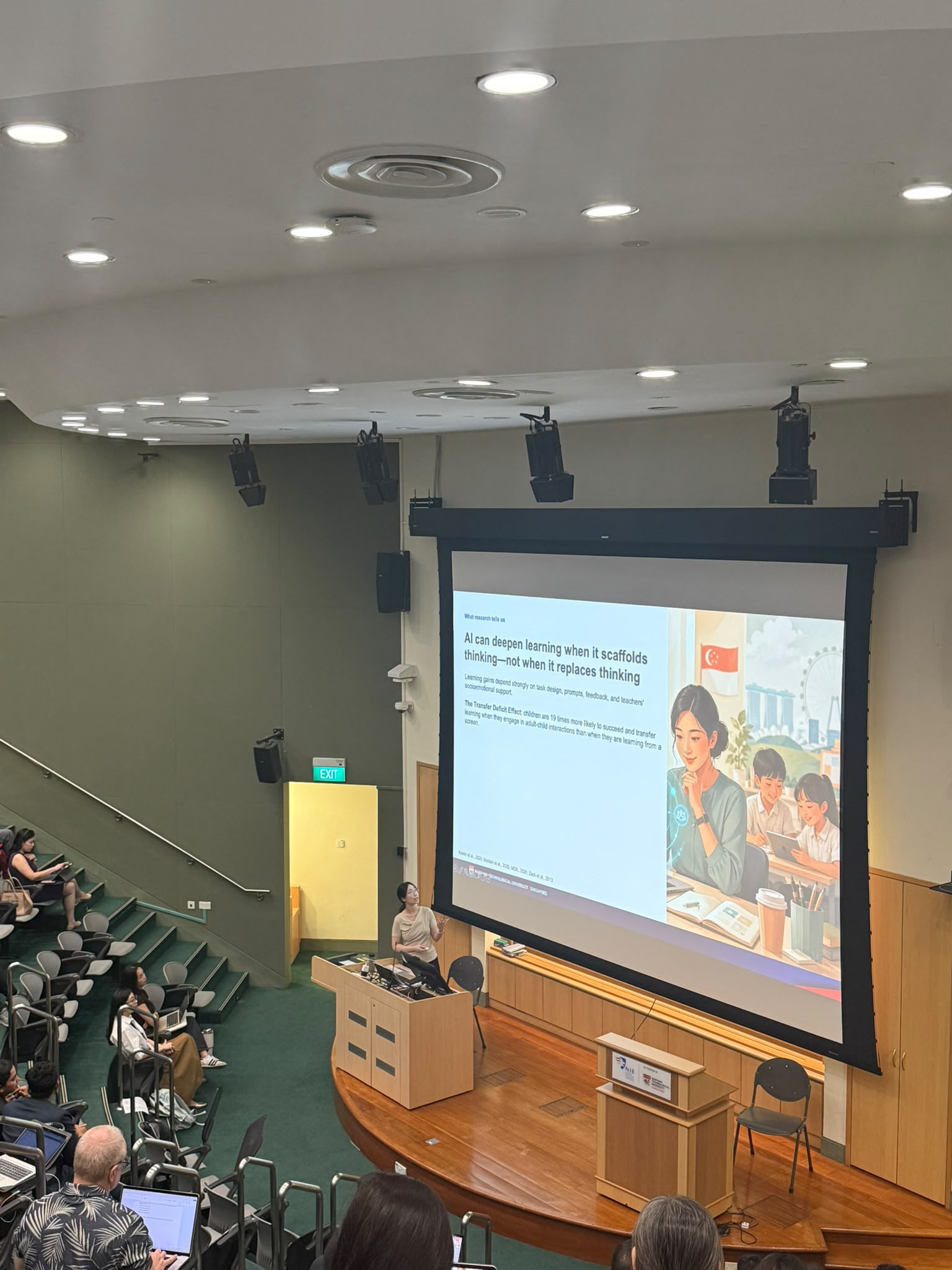
Presenting on developing human strengths for learning in the AI era at RPIC 2026.
RPIC 2026 · Keynote masterclass
Setoh, P. P., & Wu, J. (June 2026). Educating for the unpredictable—Developing human strengths in the AI age. Redesigning Pedagogy International Conference (RPIC) 2026, National Institute of Education, Nanyang Technological University, Singapore.
ACDC / SEA-LION 2026 · Workshop presentation
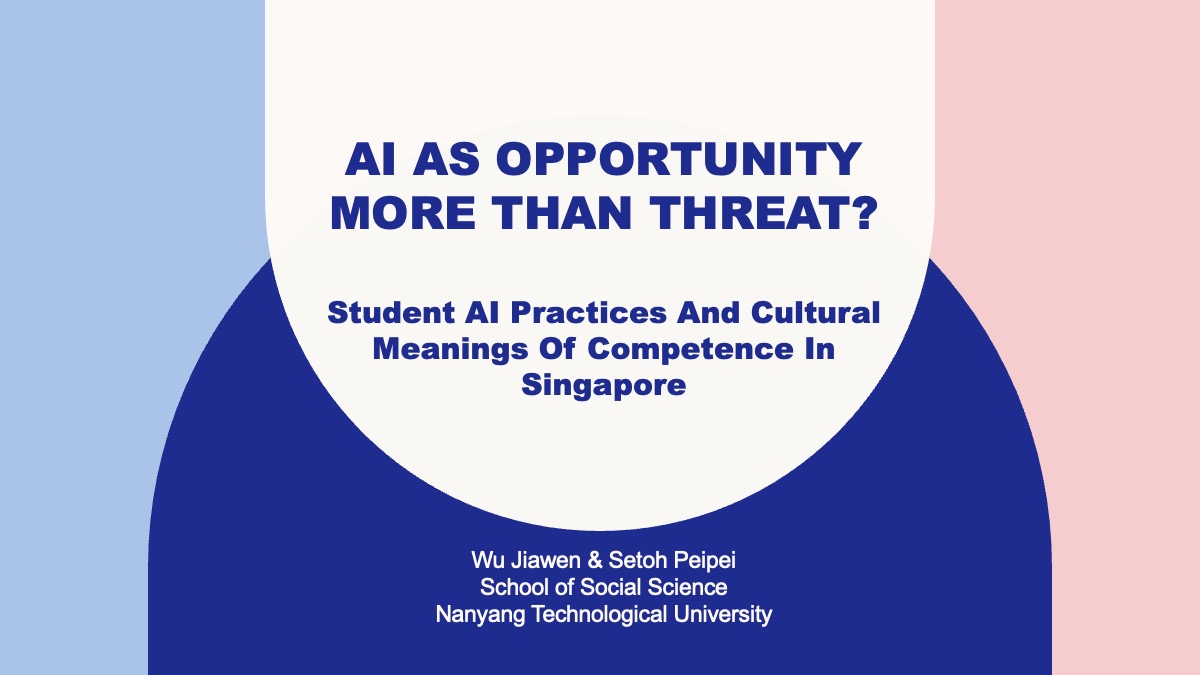
Wu, J., & Setoh, P. P. (April 2026). AI as opportunity more than threat? Student AI practices and cultural meanings of competence in Singapore. Presentation at the Asian Centre for Digital Cultures (ACDC) and Southeast Asian Languages in One Network (SEA-LION) Workshop on Culturally Aligned AI, Nanyang Technological University, Singapore.
Public workshop presentation
Explore the ideas through the ACDC / SEA-LION presentation
1 / 24
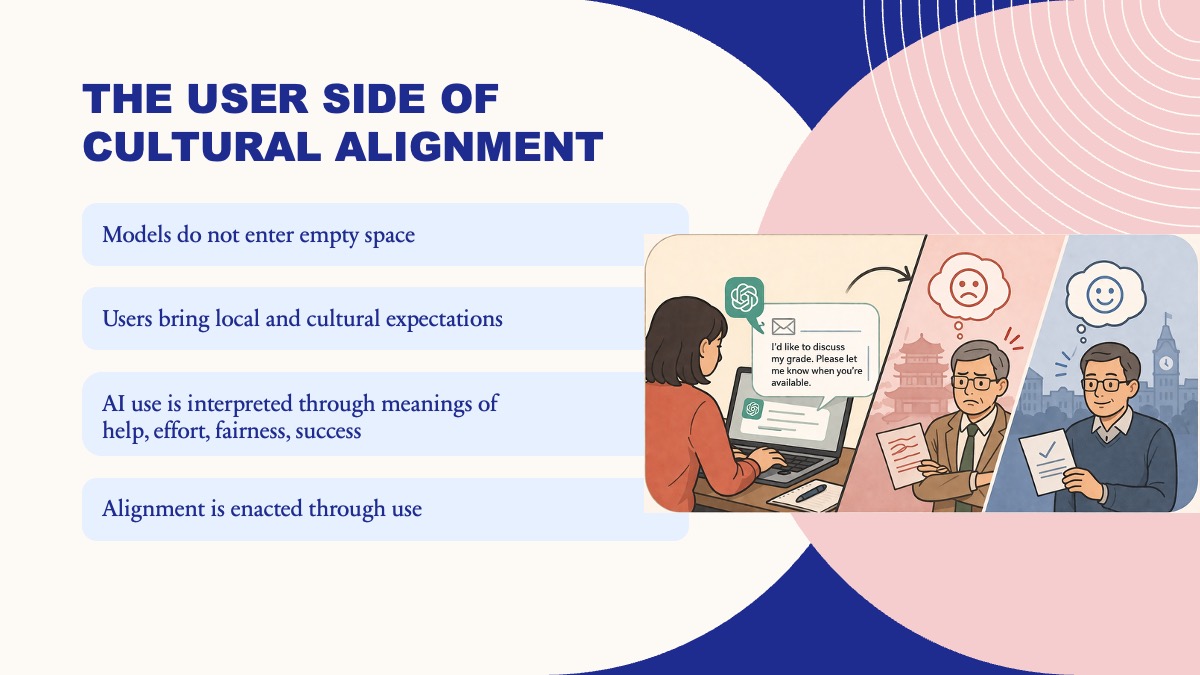
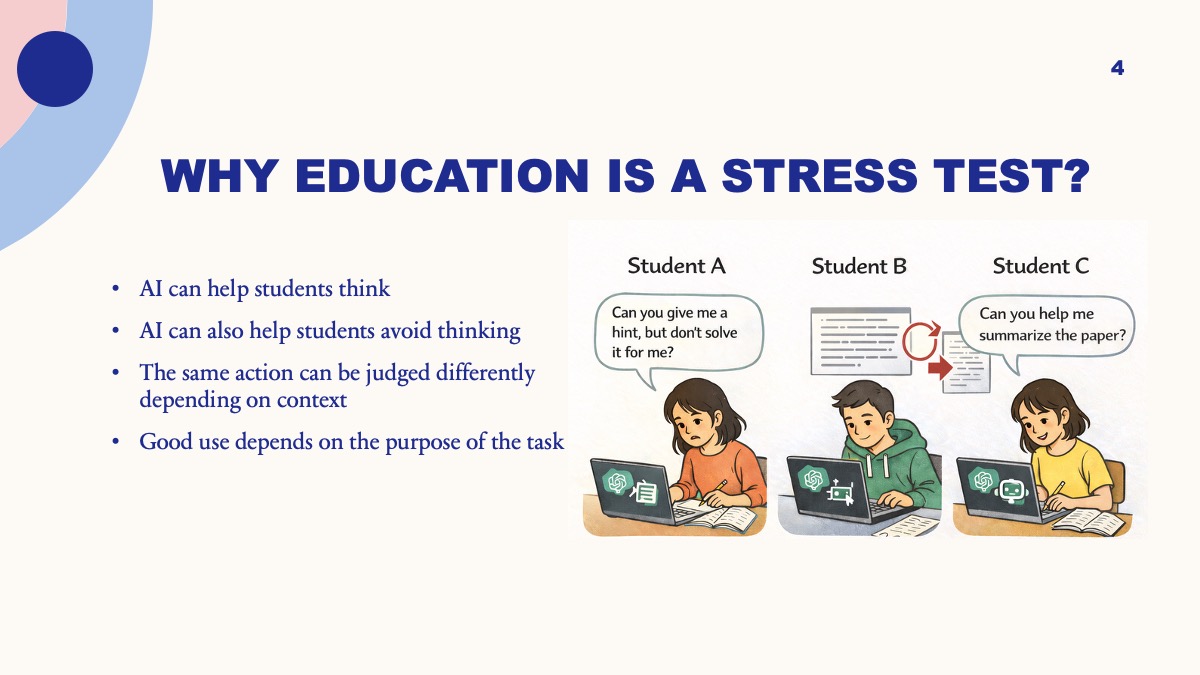
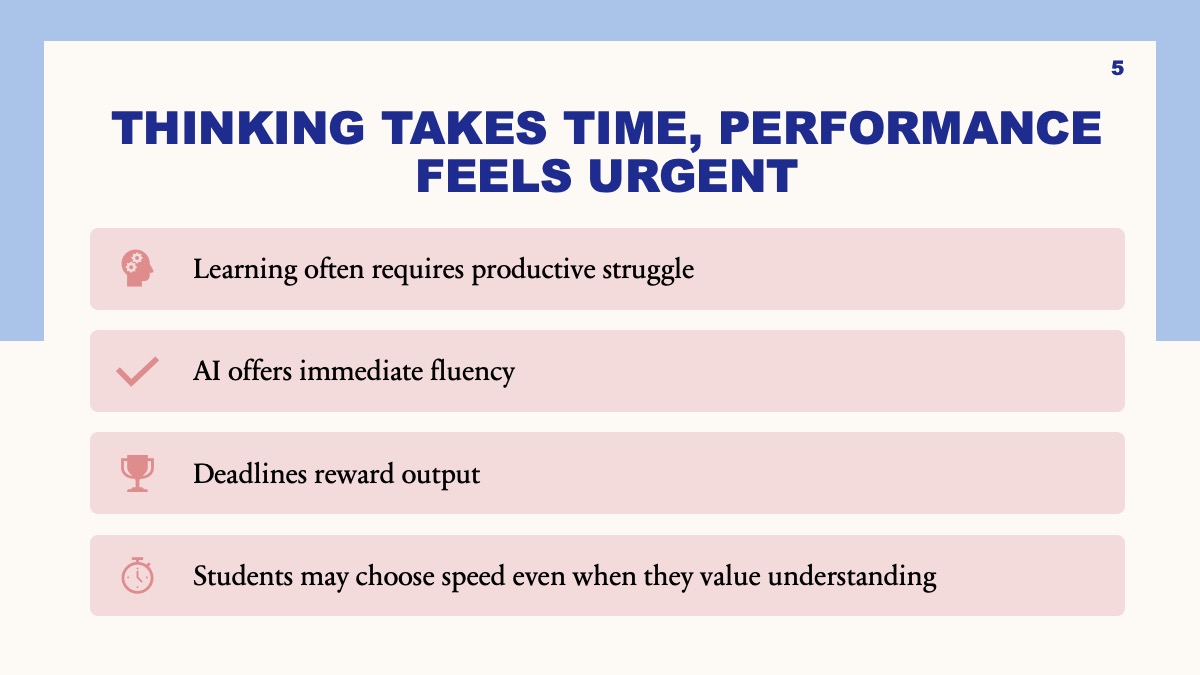
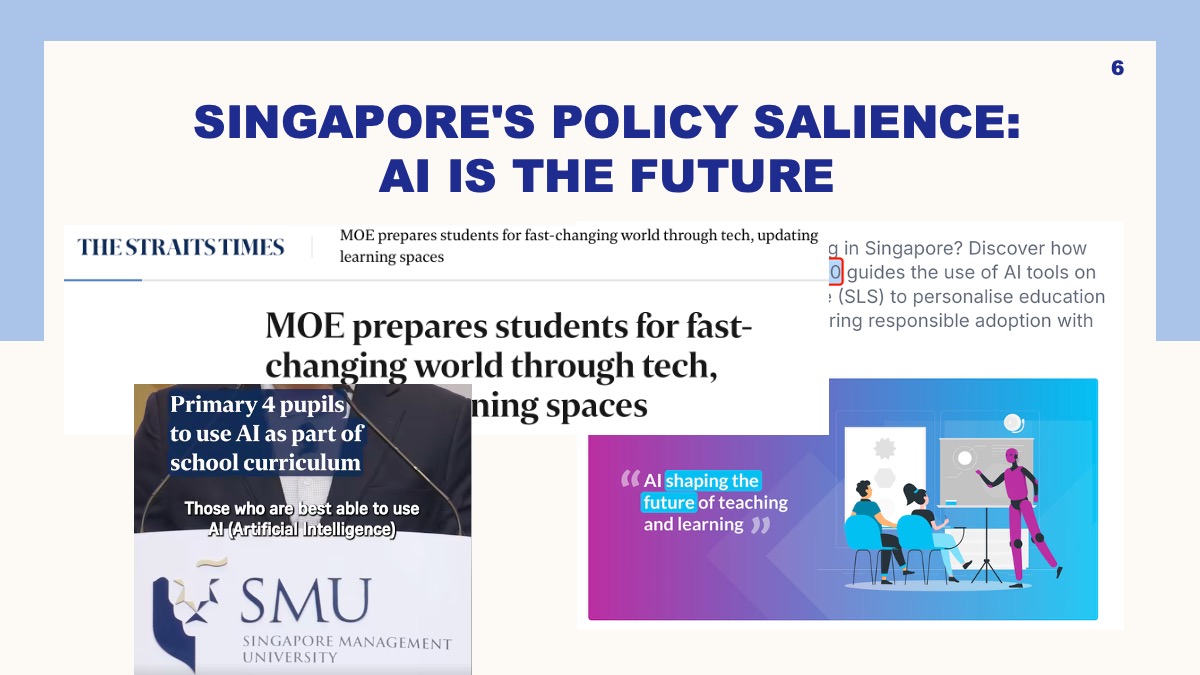
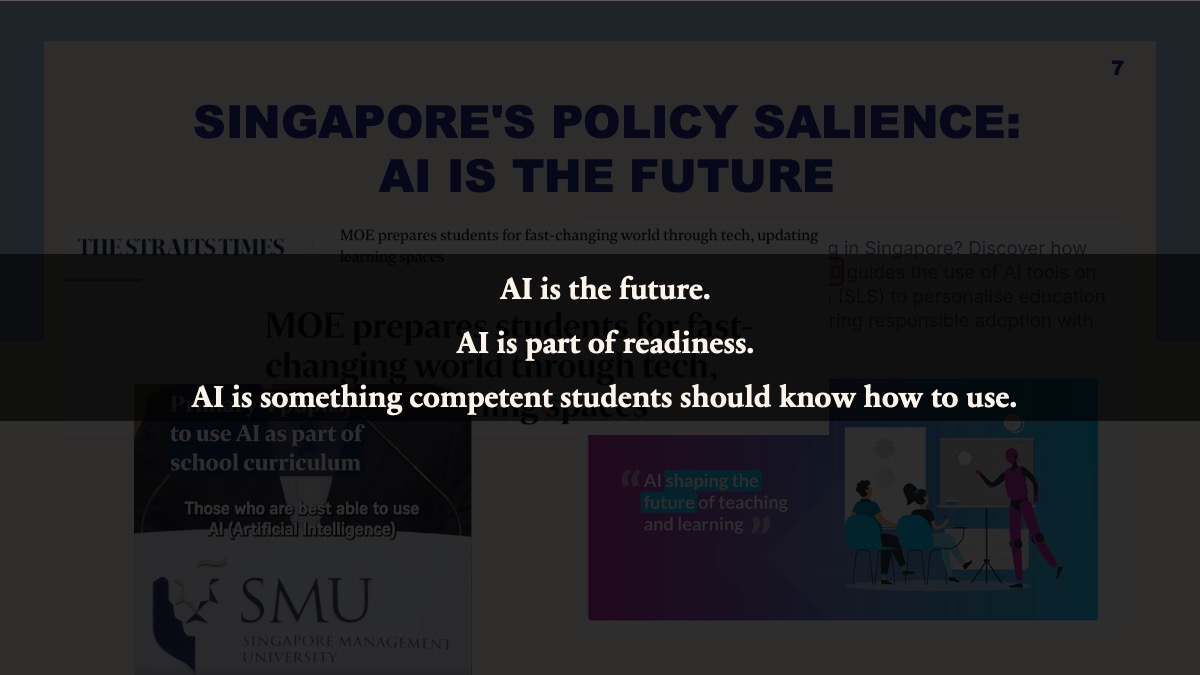
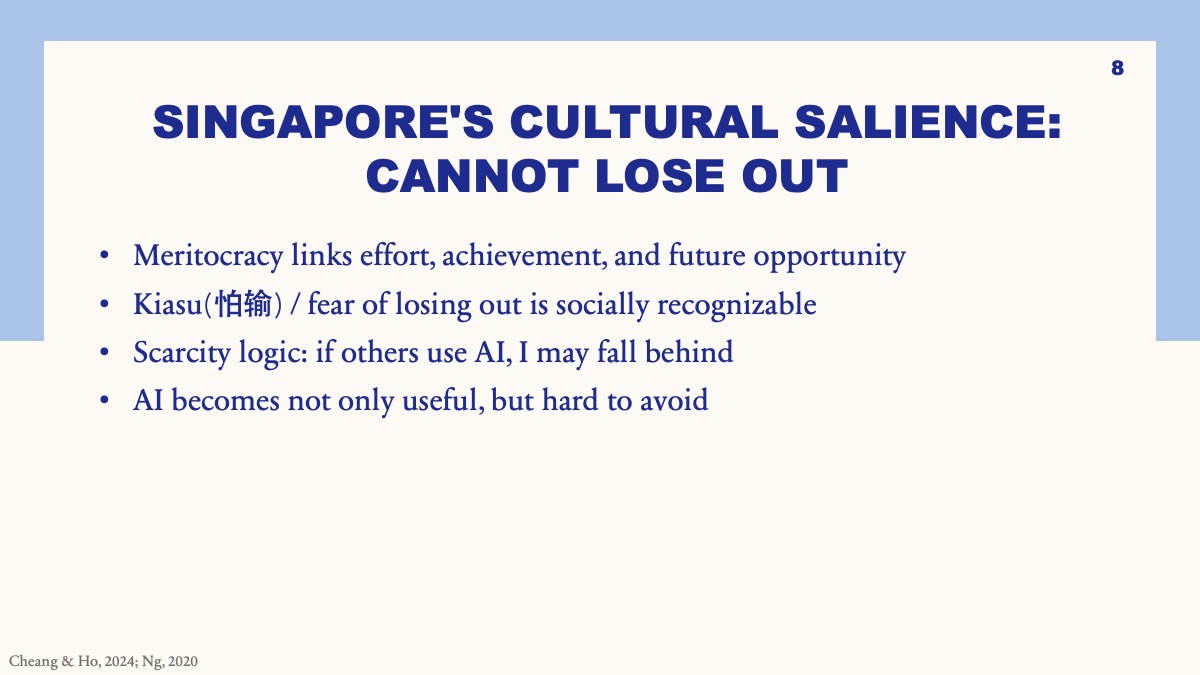
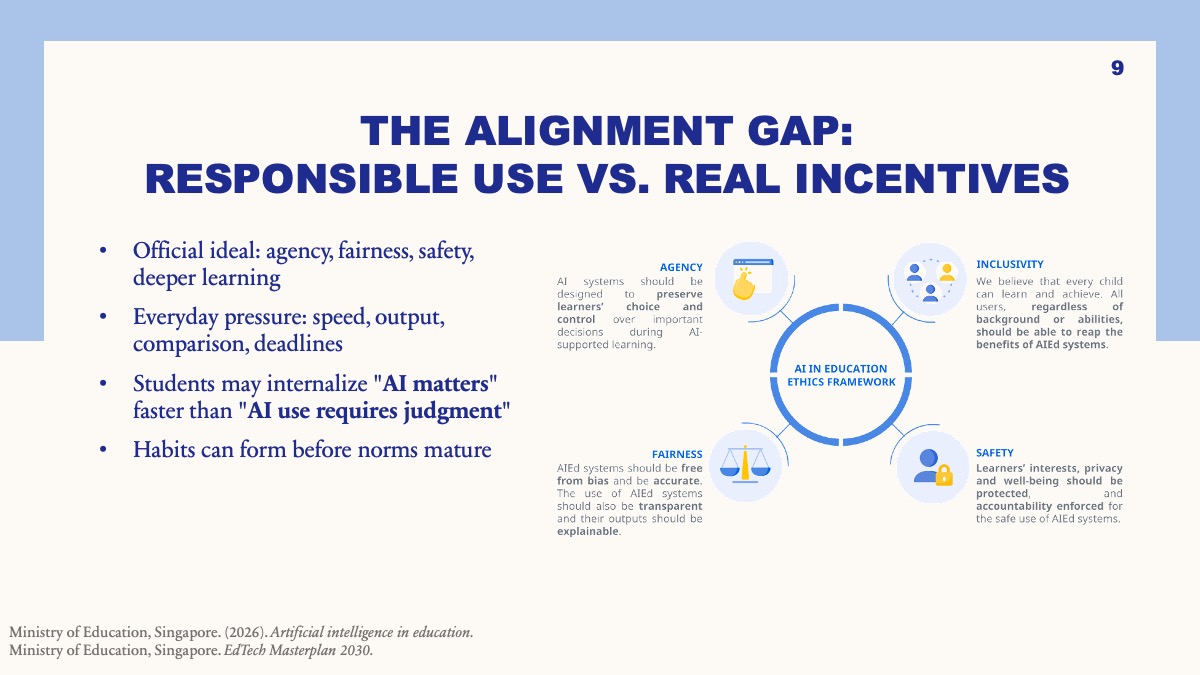
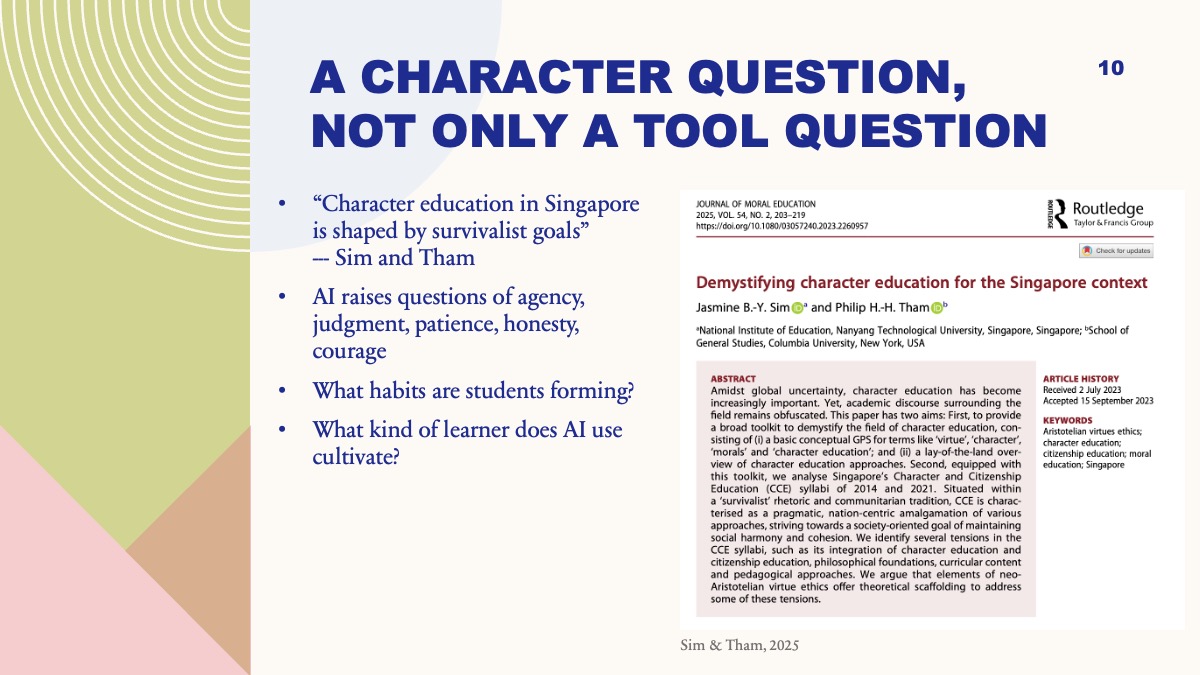
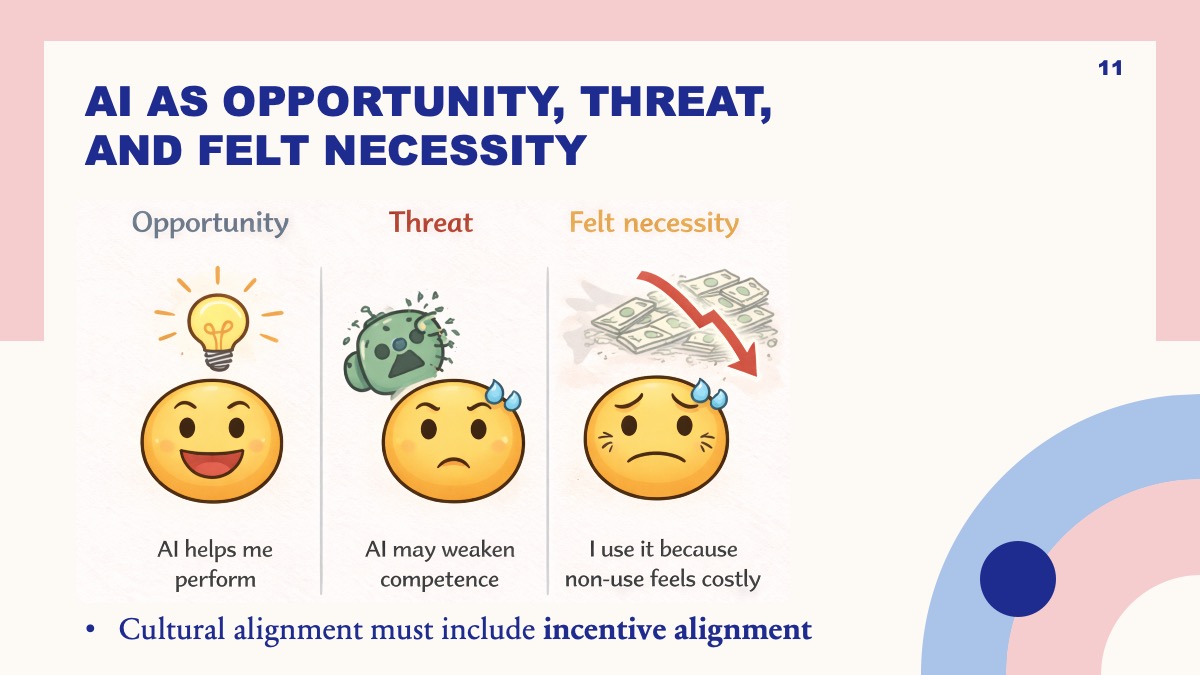
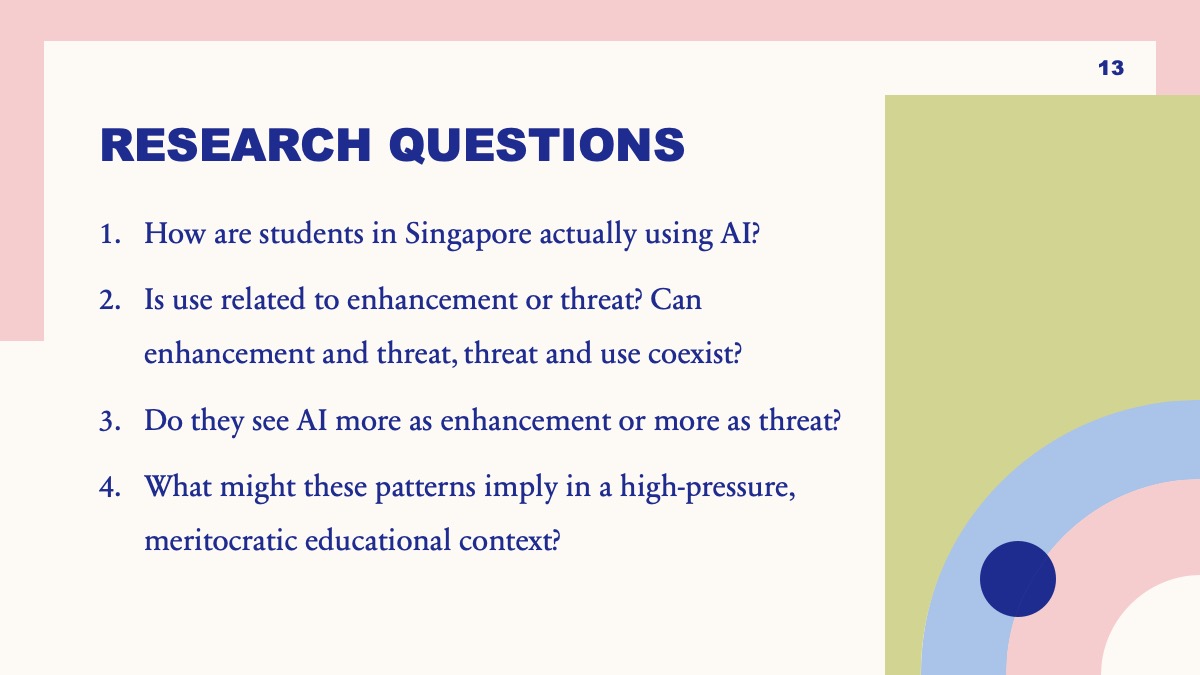
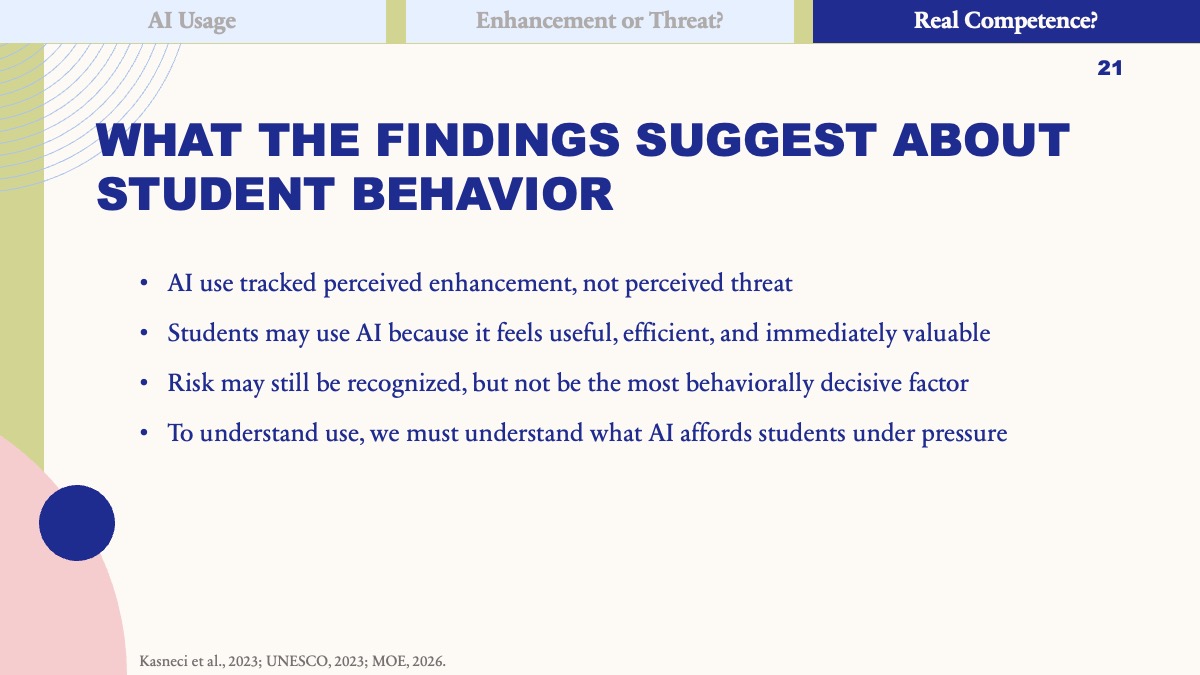
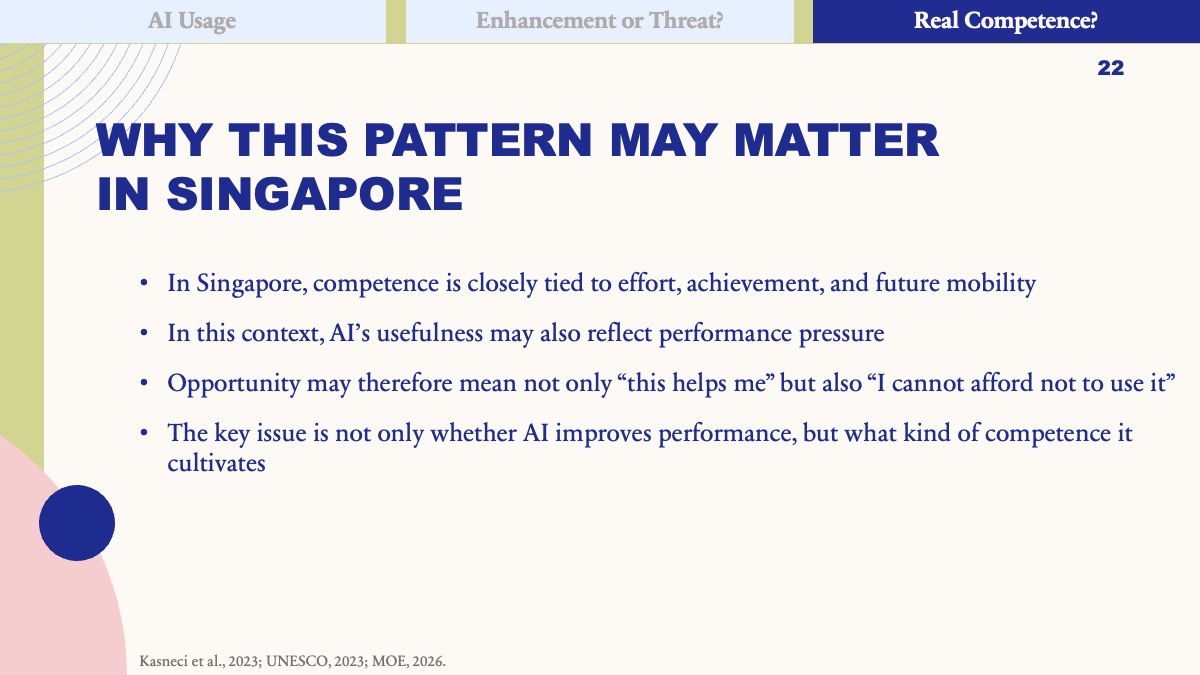
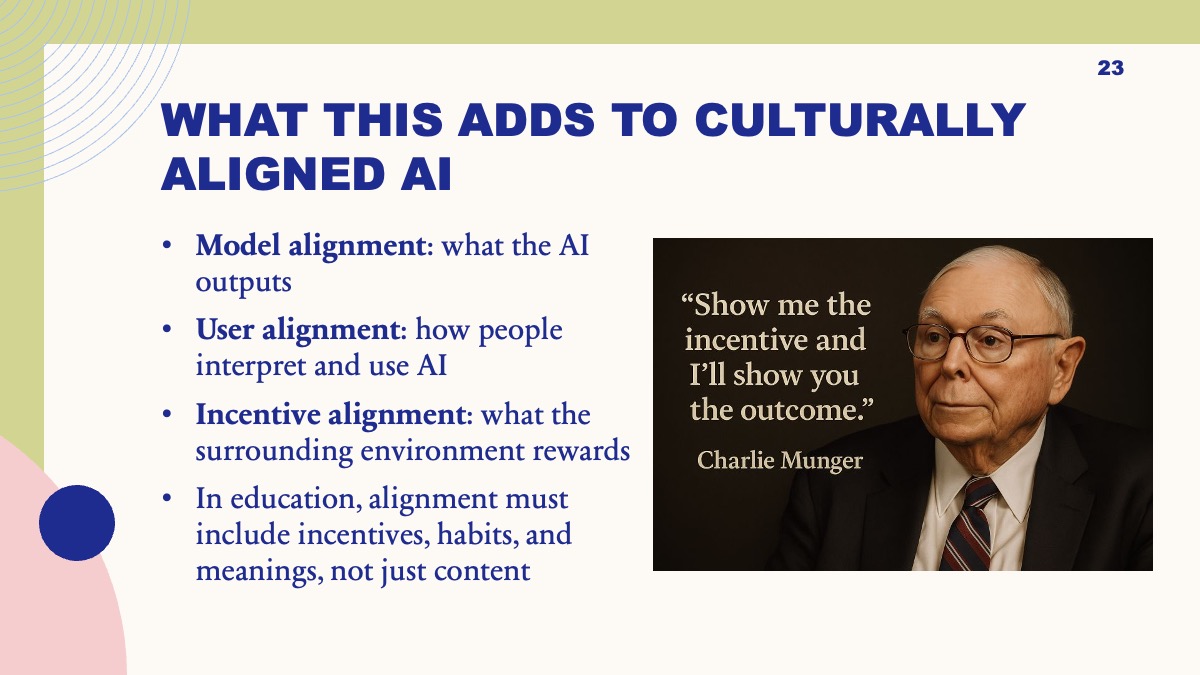
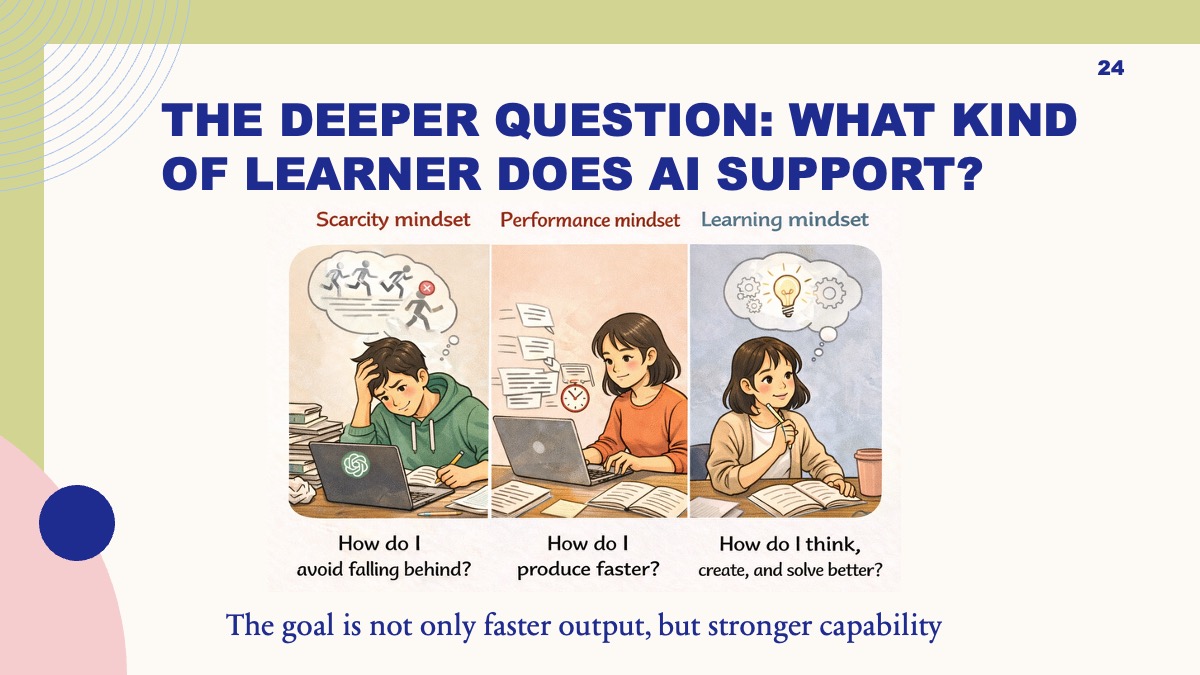
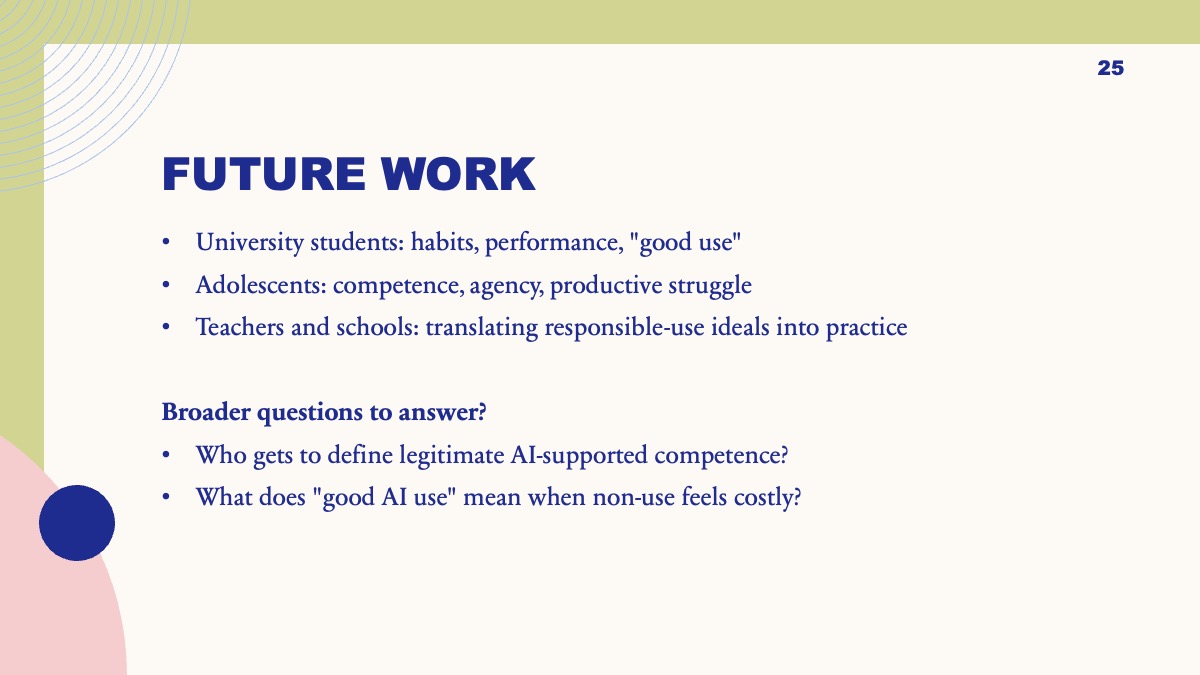
AI as opportunity more than threat?When AI becomes ordinaryThe user side of cultural alignmentWhy education is a stress testThinking takes time, performance feels urgentSingapore’s policy salience: AI is the futureAI is the future—and part of readinessSingapore’s cultural salience: cannot lose outThe alignment gap: responsible use versus real incentivesA character question, not only a tool questionAI as opportunity, threat, and felt necessityResearch questionsAI tool useAI tool use: generative academic workAI tool use: work-related and personal supportEnhancement versus threatEnhancement and threat perceptionsEnhancement and threat perceptions in relation to generative academic workEnhancement and threat perceptions in relation to professional communicationWhat the findings suggest about student behaviorWhy this pattern may matter in SingaporeWhat this adds to culturally aligned AIThe deeper question: What kind of learner does AI support?Future work
Public status: Survey and interviews are ongoing, and results will be updated soon.
Study 2
How parents and children will navigate AI together
Planned research strand
This planned strand will examine how parents and children understand one another’s expectations for AI, how families establish guidance and boundaries, and what supports AI use that strengthens children’s capabilities and independence. It will also explore parent–child interactions during AI-supported learning tasks to understand how the introduction of AI as a third participant reshapes family learning dynamics.
01
Survey patterns
Surveys characterize tools, use cases, and the coexistence of positive and negative perceptions.
02
Interview accounts
Qualitative interviews examine how adolescents and their parents reason about learning, pressure, trust, and authenticity.
03
Family dynamics
Future family research will add a developmental and relational perspective without prespecifying unsupported designs.
Talks & collaboration
Let’s think together about how families can navigate AI well.
With AI changing everything so fast, none of us have all the answers—and that's exactly why it's exciting to think about these questions together. If any of this resonates with you, I'd love to connect and chat!