Home Learning Environment: when parent’s involvement becomes pressure?
Why does parents’ involvement in homework—especially mathematics homework—so often become emotionally charged?
I want to understand why homework interactions can generate frustration, conflict, anxiety, and other negative experiences for children and parents. I am particularly interested in why some learning contexts elicit constructive parental support while others produce pressure, control, conflict, or disengagement.
Daily reports
Longitudinal research
Within-person survey
Multilevel modeling
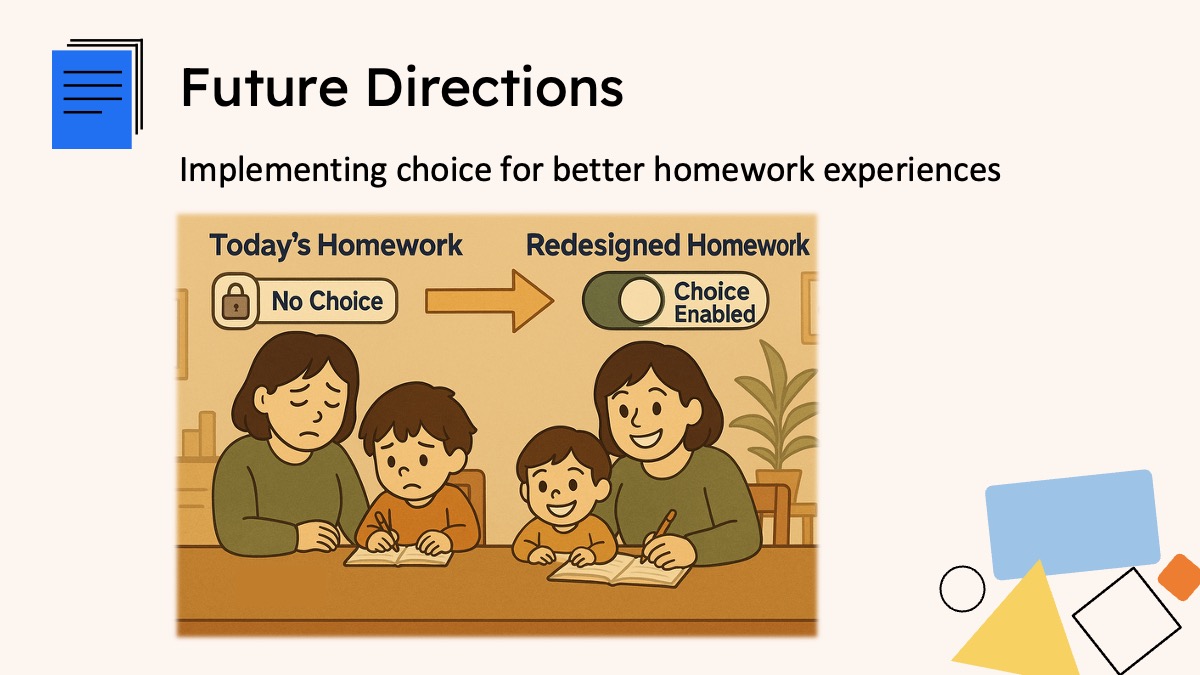
A familiar homework interaction—and the question behind this research program.
Program overview
The same parent can support learning differently in different contexts.
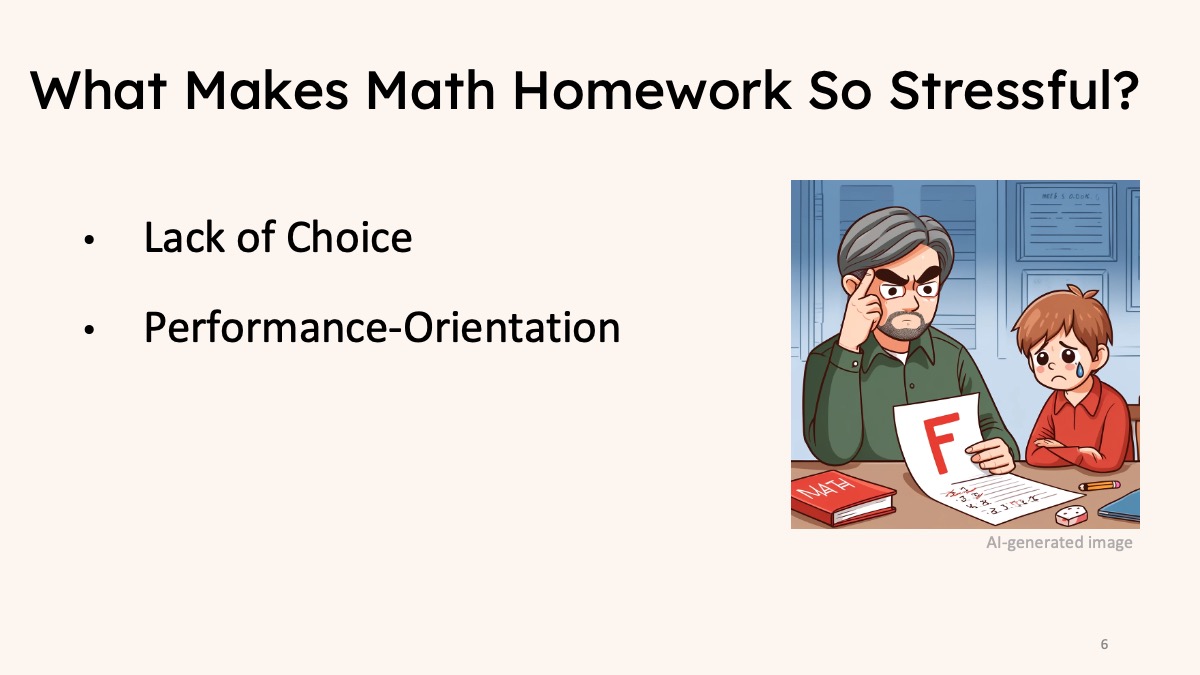
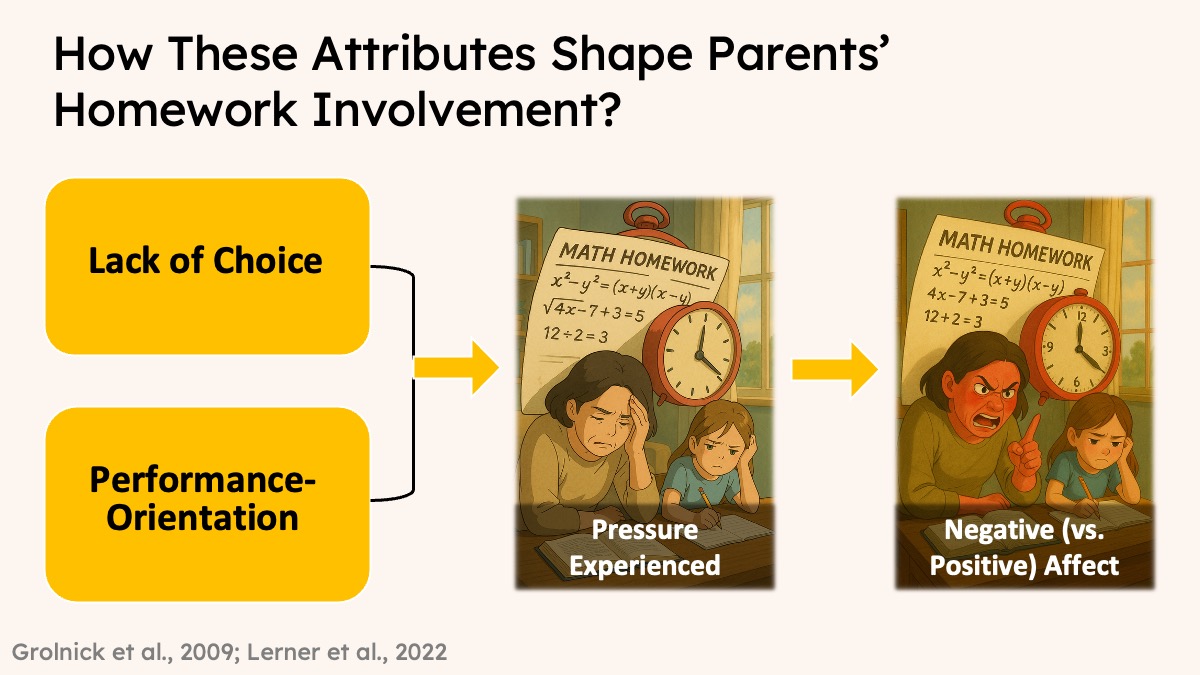
Home mathematics is not one uniform experience. Homework often carries deadlines, evaluation, and a clear “right answer,” while games and everyday activities may allow more choice and exploration.
This program investigates how those contextual differences shape parents’ motivational practices—including autonomy support and positive affect—cognitive practices such as prompts and information provision, and ultimately children’s learning outcomes.
Studies in the program
Study 1
Parents’ daily involvement in homework and activities
Published in Child Development
Wu, J., Barger, M. M., Oh, D., & Pomerantz, E. M. (2022). Parents’ daily involvement in children’s math homework and activities during early elementary school. Child Development, 93(5), 1347–1364.
Method483 parent–child dyads12 daily reportsFirst and second gradeOne-year follow-upMultilevel modeling
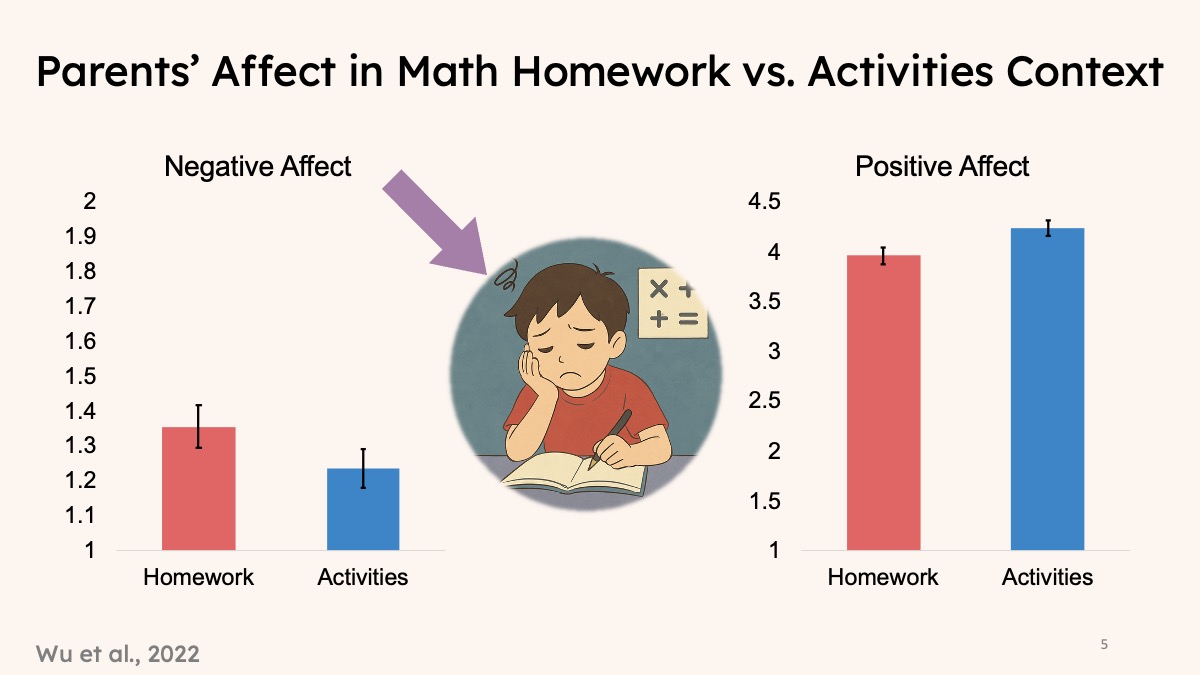
This study compared parents’ involvement across children’s mathematics homework and activities in everyday life, then linked those experiences with children’s later mathematics adjustment.
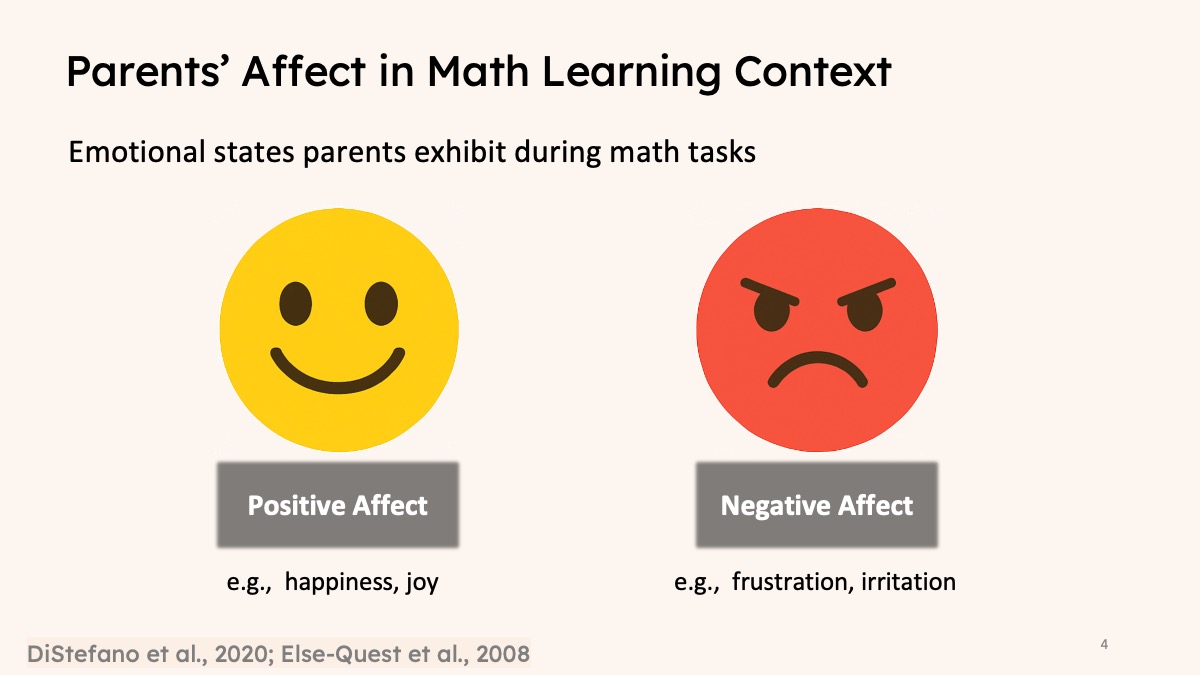
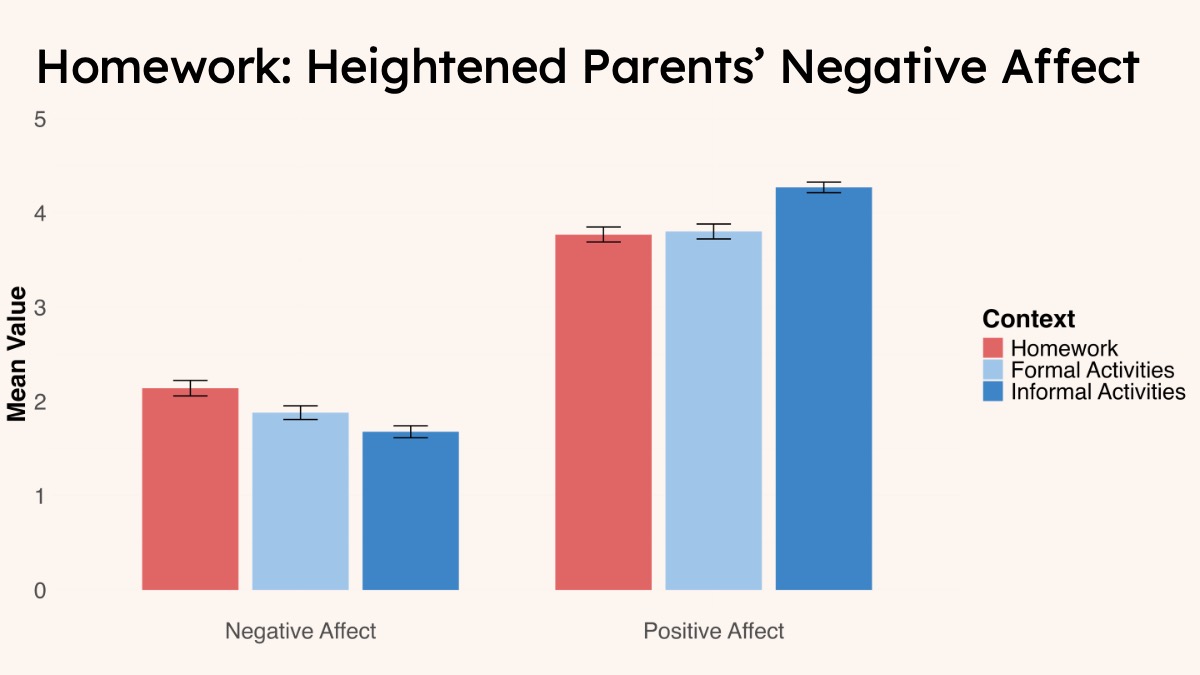
Finding: Homework involvement was characterized by less positive and more negative affect than involvement in activities. Negative affect during homework was associated with lower motivation and achievement one year later, and parents who felt more efficacious tended to become involved more constructively.
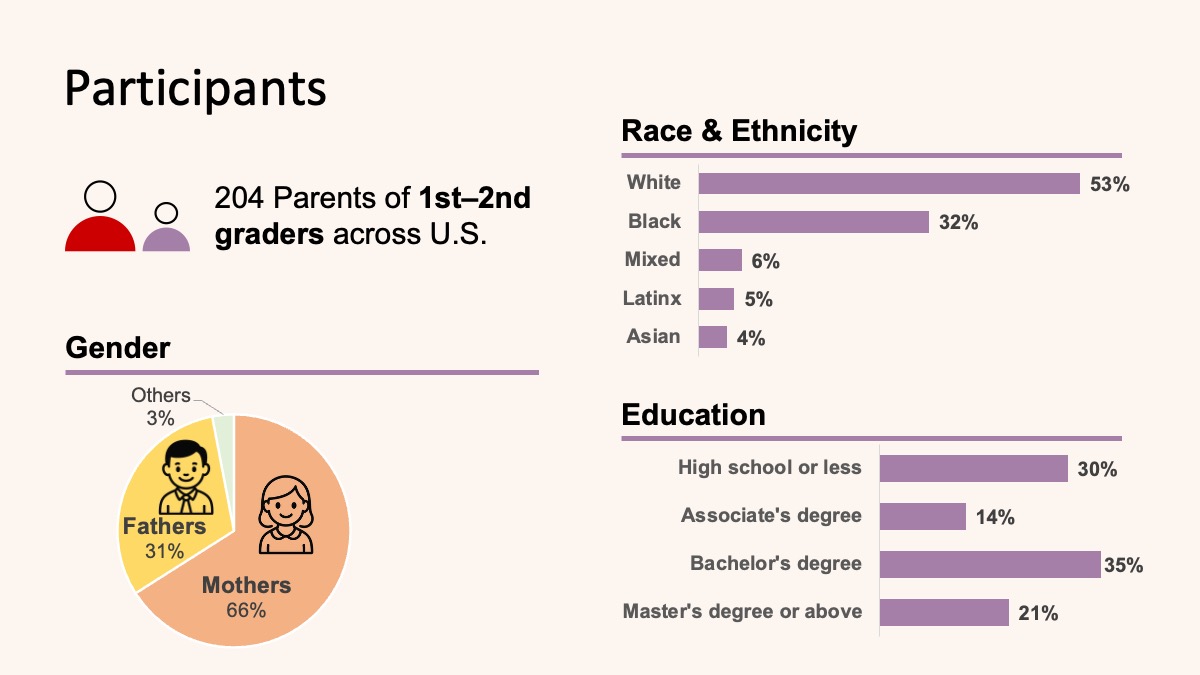
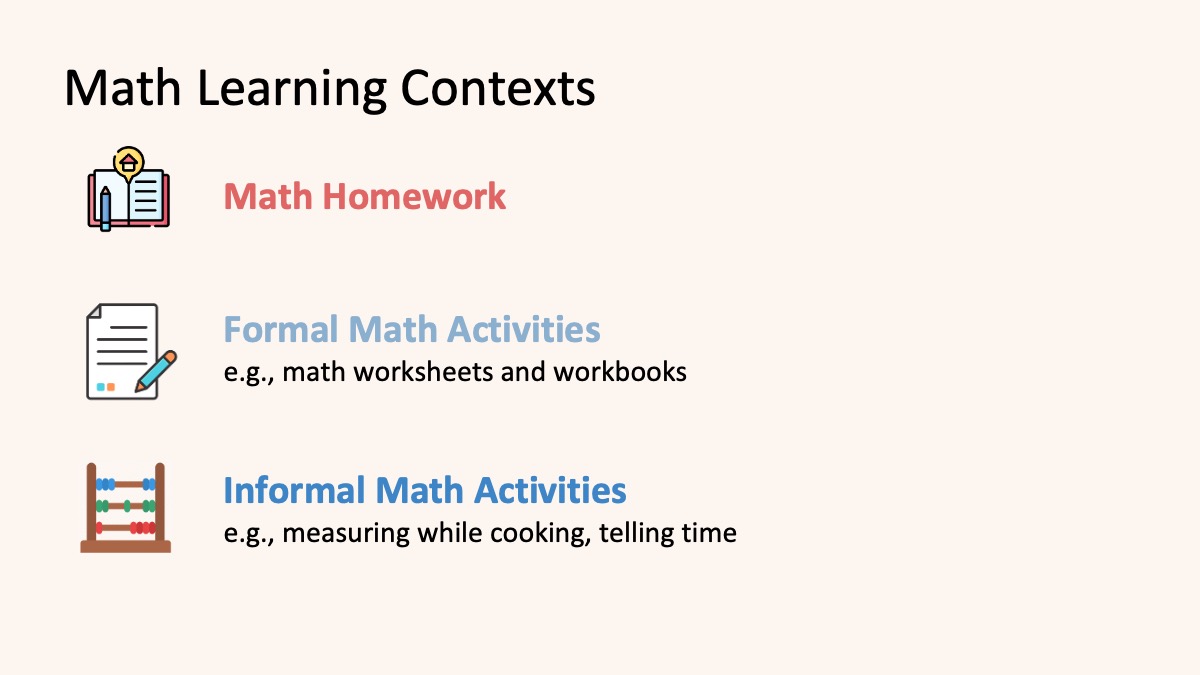
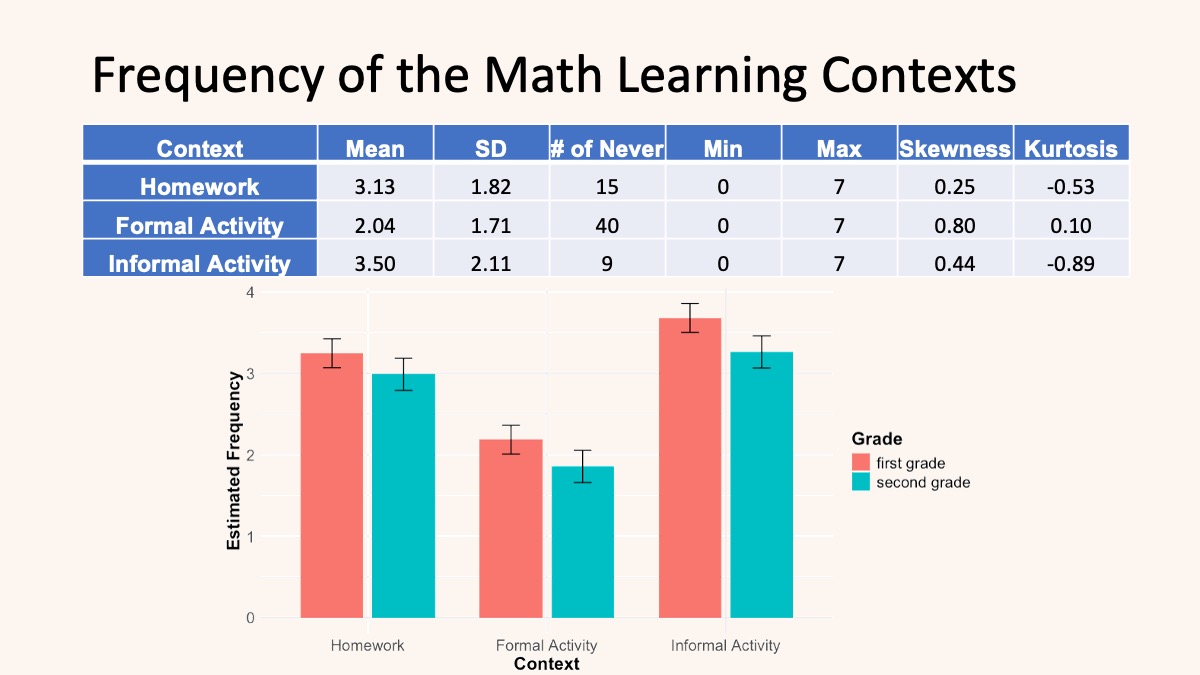
Method204 parentsWithin-person surveyHomework, formal activities, and informal activitiesQuantitative modeling
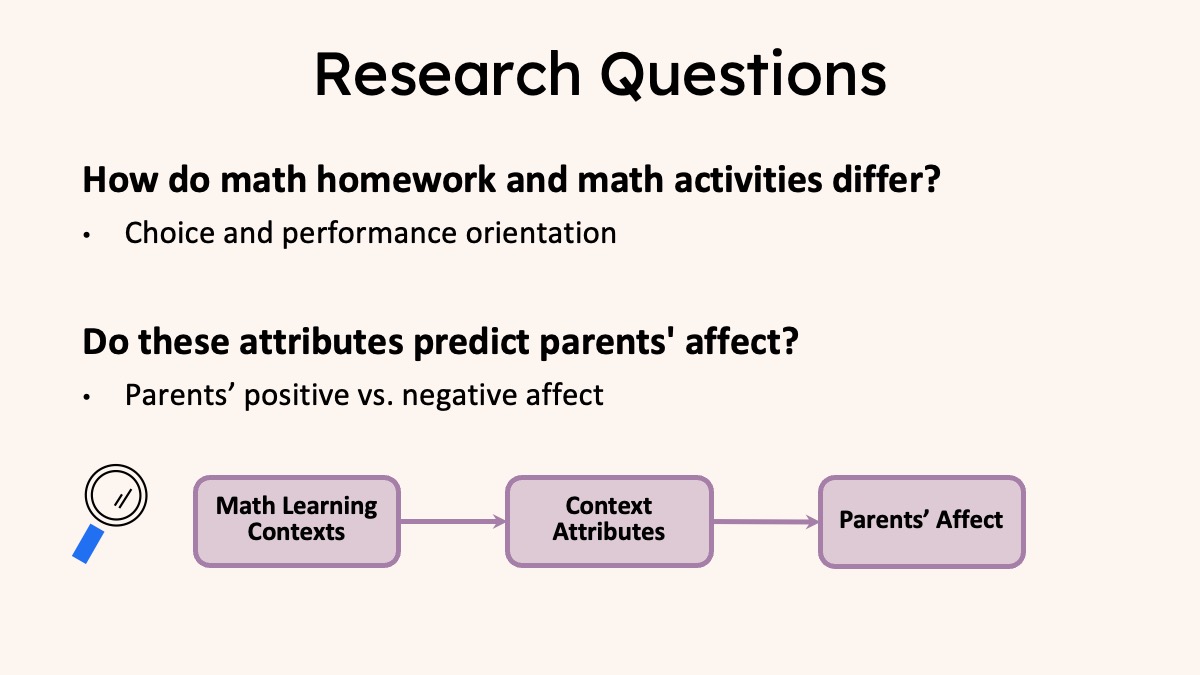
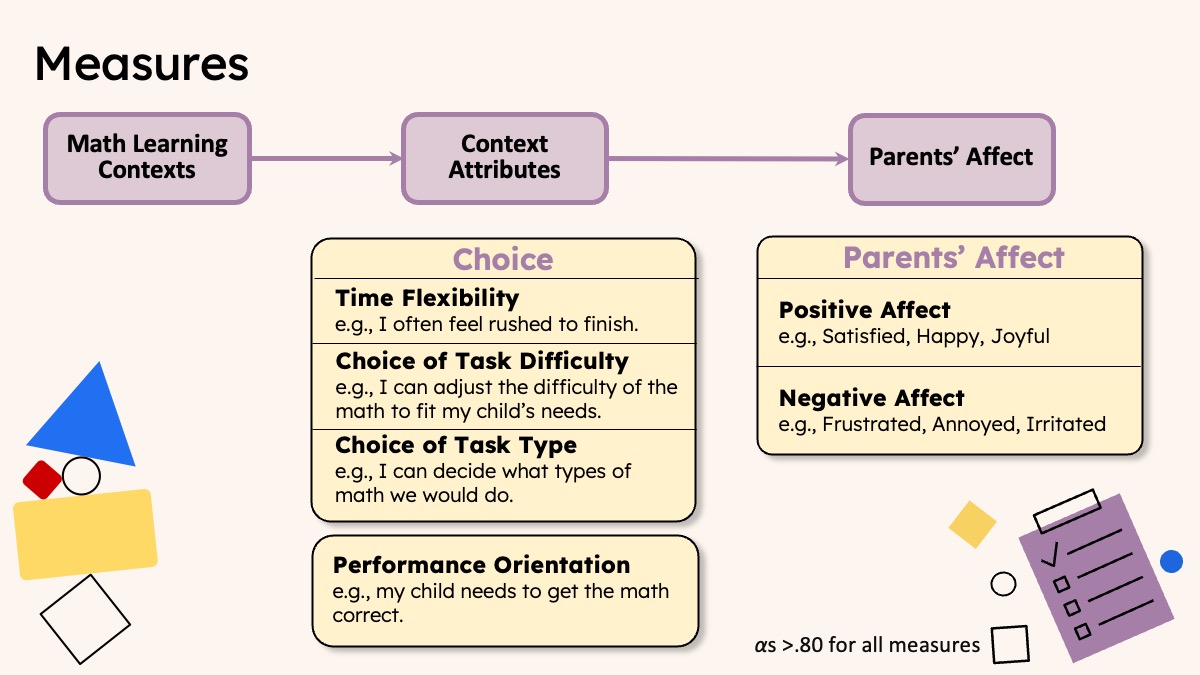
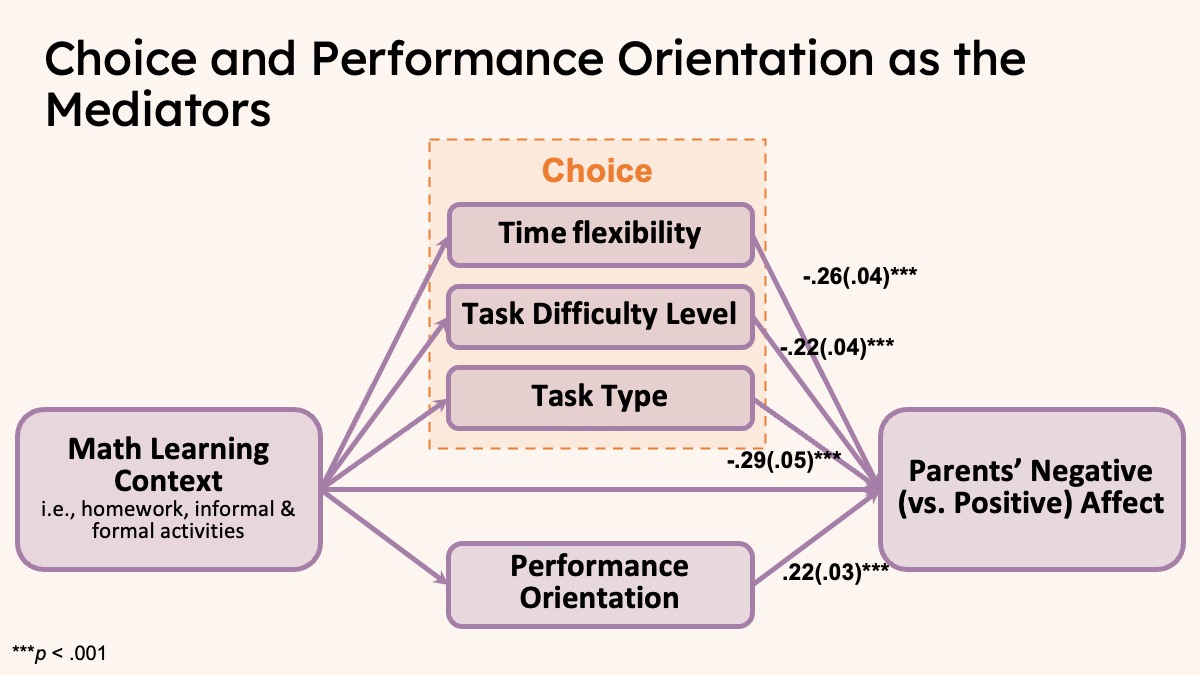
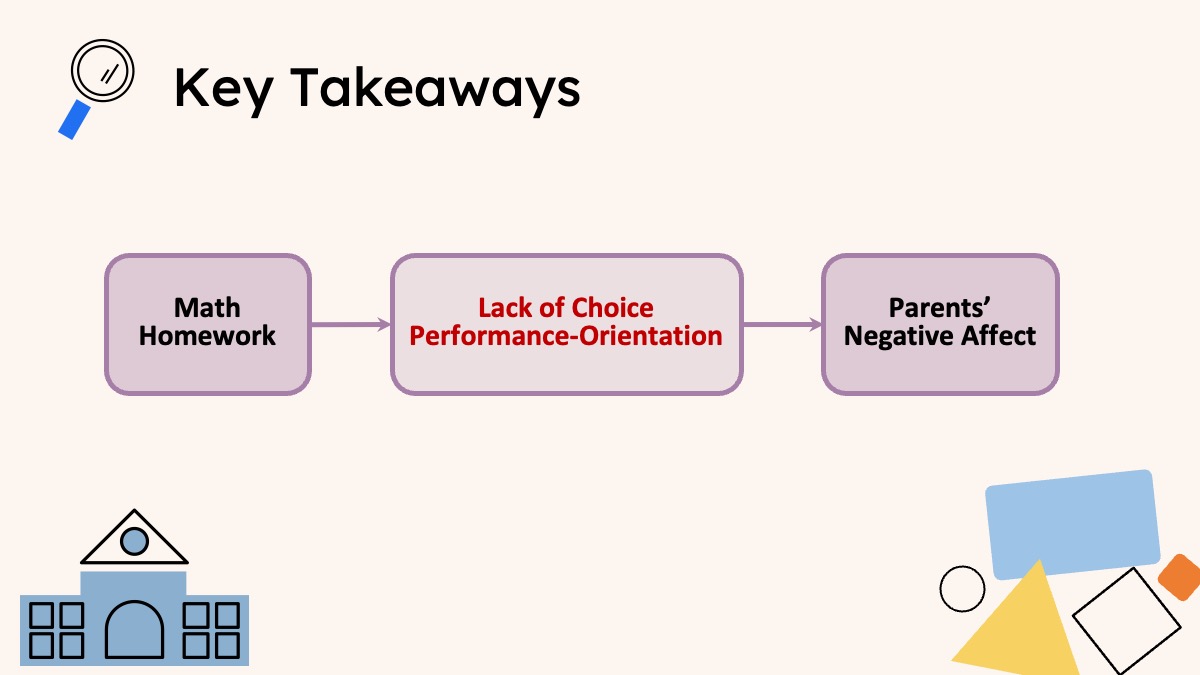
This study tested whether contextual characteristics—particularly choice and performance orientation—help explain why the same parent may become involved differently across three home mathematics contexts.
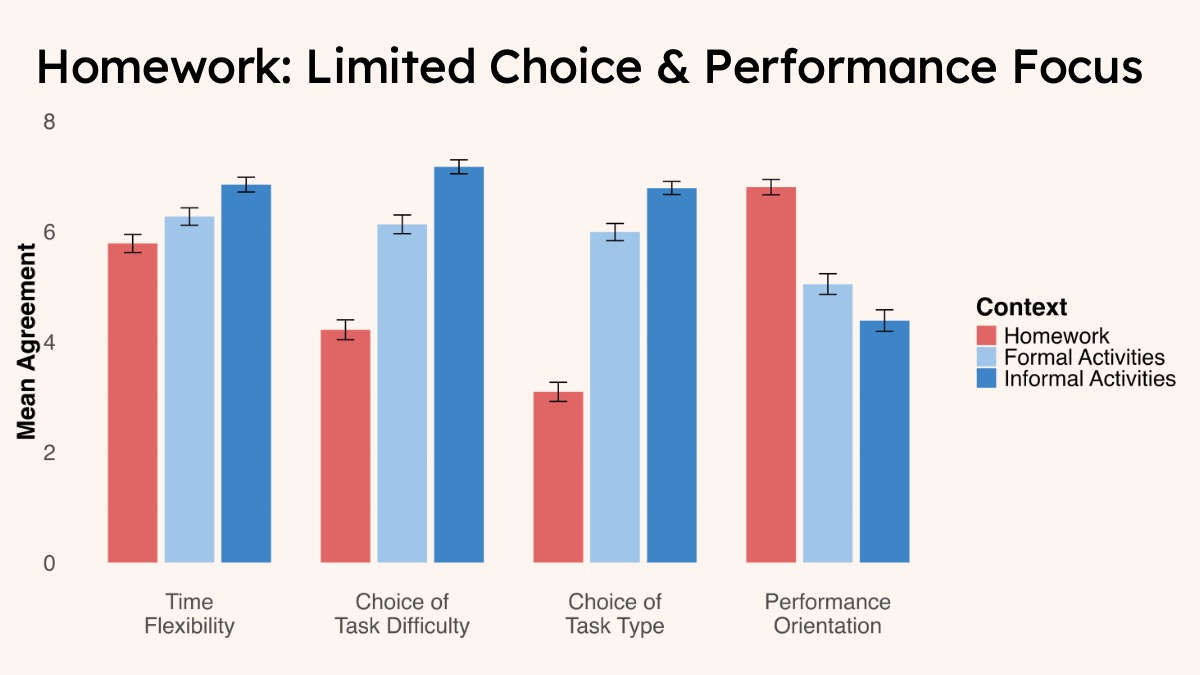
Finding: Compared with activities, homework offered children less choice and elicited a stronger performance focus. Parents also reported more pressure and less constructive affect and cognitive scaffolding. Choice and performance-oriented goals helped explain some of these differences.
Research status: These findings appear in a completed dissertation and a public SRCD presentation. A manuscript is in preparation.
Public conference output
Wu, J., & Pomerantz, E. M. (May 2025). From Math Activities to Math Homework: Contextual Influences on Parents’ Involvement. Symposium talk presented at the Society for Research in Child Development 2025 Biennial Meeting.
Selected presentation slides
Click through the SRCD 2025 talk
1 / 15
Opening: From math activities to math homeworkDefining parents’ positive and negative affectAffect across homework and activity contextsWhat makes mathematics homework stressful?How context may shape parents’ affectResearch questionsParticipantsThree mathematics learning contextsMeasuresHomework provides less choice and a stronger performance focusHomework involvement is associated with more negative and less positive affectChoice and performance orientation as explanatory pathwaysKey takeawaysFuture directionsAppendix: Frequency of mathematics learning contexts
Study 3
Child-responsive home learning environments and children’s later achievement
Manuscript in prep
MethodSingapore longitudinal cohortChildren’s early skillsFamily activity provisionAchievement across eight years
This strand asks whether the activities families provide are responsive to children’s current skills and whether that fit changes over development. It connects the context question to a longer developmental timescale by examining how child-responsive home learning environments contribute to children’s achievement across an eight-year period.
Research status: Analyses are ongoing, and results will be updated soon.
Conceptual contributions
Why context may shape parents’ involvement
Motivational resources
Choice and autonomy can support children’s internal motivation, while external demands may make performance and completion more salient.
Achievement goals
Contexts can emphasize demonstrating ability or avoiding mistakes, or instead make room for learning, strategy use, and improvement.
Developmental fit
Support is most useful when it responds to what a child can already do and extends learning without taking over the task.